


Living with a cat can sometimes feel like sharing your home with someone who follows a completely different set of rules.
You buy a new sofa, and your cat immediately starts scratching it. You settle into bed, and they decide it is the perfect time to race through the hallway. You clear the kitchen counter, turn around for a moment, and find them sitting exactly where you were about to prepare dinner.
Cats have a wonderful ability to make ordinary household life a little unpredictable. But many of the behaviors we find strange or frustrating make much more sense when we look at them from a cat’s point of view.
Scratching, climbing, chasing, hiding, and communicating through scent are all part of feline life. Sometimes the challenge is simply finding a way for those normal behaviors to fit comfortably into our homes. Other times, a change in behavior can tell us that a cat is stressed, uncomfortable, or unwell.
Here are ten familiar situations, what may be behind them, and what you can do.
1. Why Does Your Cat Scratch the Furniture?
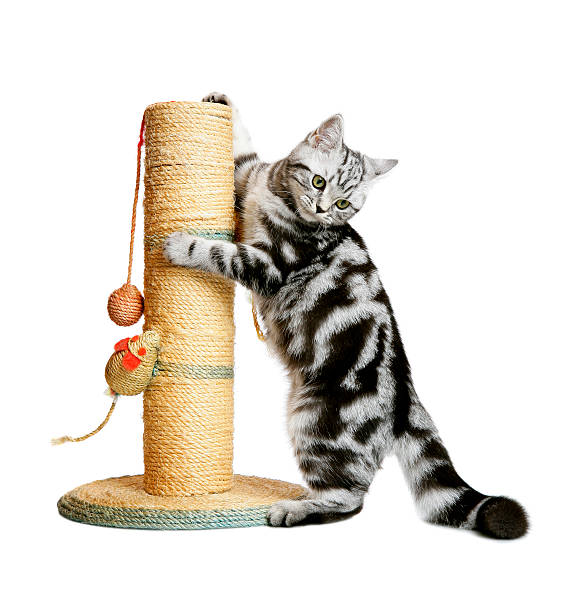
You have provided a perfectly good scratching post. It stands proudly in the corner of the living room, almost completely untouched, while your cat continues working on the arm of the sofa.
It is tempting to take this personally, especially when the furniture is new. But scratching is something cats genuinely need to do.
It helps remove the outer layers of the claws, stretches the body, and leaves both visible marks and scent cues from glands in the paws. The sofa may simply offer everything your cat wants in a scratching surface: a satisfying texture, a sturdy base, and a convenient location.
That last part matters. A scratching post hidden behind a door may be far less appealing than the couch beside a favorite resting place or along a route your cat uses every day.
Give Scratching Somewhere Better to Go
Start by watching how your cat likes to scratch. Do they stretch upward against furniture, work their claws into a rug, or use a mixture of vertical and horizontal surfaces?
Some cats prefer tall, sturdy posts they can fully stretch against. Others are happier with cardboard pads, horizontal scratchers, or angled surfaces. Offering a little variety is often more useful than assuming one post should suit every cat.
Place an alternative close to the furniture your cat already uses rather than somewhere convenient only for you. Catnip, play, or a reward after using the scratcher may help some cats become interested.
If the new surface is ignored, try a different texture, orientation, or location before deciding your cat simply refuses to use scratching furniture. The aim is not to stop scratching; it is to give that normal behavior a better place to happen.
2. Why Has Your Cat Stopped Using the Litter Box?
Few things are more frustrating than discovering that your cat has used the laundry basket instead of the litter box, especially when that same box was perfectly acceptable yesterday.
But a change in toilet habits is a reason to investigate, not a reason to punish the cat.
Sometimes the explanation lies in the box itself. Cats can be particular about cleanliness, litter texture, location, and how safe they feel while using it. A noisy washing machine may make one spot unpleasant, another animal may block the route, or an older cat with painful joints may struggle to climb into a high-sided tray.
Even a new litter can make a familiar bathroom feel different. And sometimes the problem has nothing to do with the box at all.
Bladder inflammation, urinary problems, constipation, pain, and other health conditions can all change a cat’s toileting habits.
Check Health and the Litter-Box Setup
If your cat suddenly starts urinating or defecating outside the litter box, call your vet rather than assuming it is a behavioral problem.
At home, look at the setup too. Is the box clean and easy to reach? Is there enough room for your cat to turn around? Does the litter seem comfortable to dig in? Can another cat, dog, or person interrupt them?
In a multi-cat home, a commonly recommended starting point is one litter box per cat, plus an extra. Just as important, those boxes should be in separate, useful locations rather than lined up together as though several trays in one room count as several independent choices.
And there is one warning worth remembering: if your cat repeatedly strains to urinate but produces little or no urine, treat it as an emergency and get veterinary help immediately. A urinary blockage can become life-threatening.
3. Why Does Your Cat Race Around at Night?
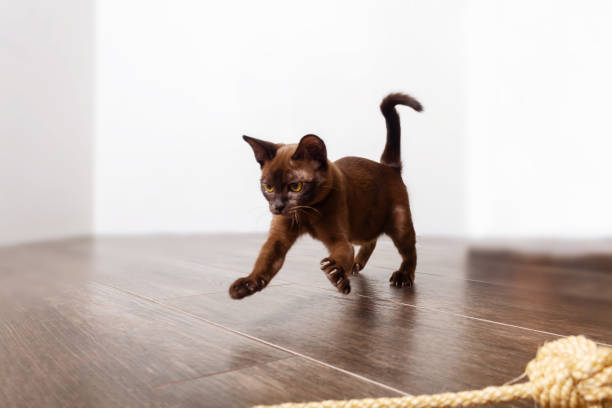
There you are, finally falling asleep, when something thunders down the hallway. A moment later, your cat launches across the bedroom, disappears beneath the bed, and comes flying out again.
The famous zoomies have arrived.
Cats often have bursts of activity around dawn and dusk, although individual routines vary. An indoor cat who has spent much of the day resting may also have plenty of energy ready for the next opportunity to chase, sprint, and pounce.
From your cat’s point of view, midnight may simply be a perfectly reasonable time to become active.
Shift Some of the Action Into the Evening
Regular opportunities to chase, stalk, and pounce during the day can help. Wand toys are especially useful because you can make them move like prey—hiding, darting away, stopping, and giving your cat a chance to catch them.
An active play session in the evening may provide a satisfying outlet before bedtime. Keeping feeding and play routines reasonably predictable can also make your cat’s day easier to anticipate.
If your cat regularly wakes you at dawn expecting breakfast, an automatic feeder may help if it fits their feeding routine.
You may never persuade a cat that nighttime is strictly for sleeping. But if frantic activity appears suddenly, becomes extreme, or comes with signs of discomfort or other unusual behavior, do not dismiss the change as ordinary zoomies.
4. Why Is the Kitchen Counter So Irresistible?
From your perspective, the kitchen counter is where food gets prepared. From your cat’s perspective, it is a high platform with an excellent view, interesting smells, and the occasional forgotten crumb.
The attraction is not difficult to understand.
Cats often enjoy elevated places because they offer a useful view of their surroundings. A counter becomes even more rewarding if your cat has previously discovered food there.
Of course, kitchens are not always safe places for curious paws. Hot surfaces, sharp utensils, and food preparation areas make boundaries useful for both cat and household.
Make Another High Place More Rewarding
A cat tree, shelf, or window perch can give your cat somewhere elevated to watch what is happening without wandering across the chopping board.
Keep counters free of food scraps and avoid feeding your cat there. When they choose the permitted perch instead, reward that choice with attention, play, or something else they enjoy.
Constantly shooing a cat off the counter often teaches only one lesson: get down when the human is watching. Changing the environment is usually more reliable than trying to supervise every jump.
5. Why Does Your Cat Meow So Much?
Some cats greet their people with a quiet chirp. Others seem determined to narrate the entire day.
They meow when you walk into the room, when you approach the kitchen, when you close a door, and occasionally when you are already looking directly at them.
A talkative cat can be wonderfully entertaining, although the conversation may become less charming at five in the morning.
Meowing can be associated with attention, food, access to a room, excitement, frustration, or events in the environment. But there is no universal dictionary that translates every sound into one fixed meaning.
Look for the Pattern Behind the Meowing
Your own cat’s routine is often the best clue. Notice when the vocalizing happens and what tends to happen next.
Does your cat meow beside the food cupboard? At a closed door? When you arrive home? After spending a long period without interaction?
If familiar meowing seems connected with boredom or a desire for company, regular play and interaction may help. You can also avoid turning every demand into an automatic reward if you know the cat’s needs have already been met.
A new change is different. Pain, illness, changes in hearing or vision, and other health problems can alter vocal behavior, especially in older cats.
If your cat suddenly becomes much more vocal, seems confused, sounds different, or has other concerning signs, call your vet.
6. Why Does Your Cat Ambush Your Ankles?
You are walking peacefully through the living room when a furry shape darts out from behind the sofa. Before you know it, your ankle has become the target of a carefully timed attack.
For some cats, moving feet are almost irresistible.
Stalking, chasing, grabbing, and pouncing all belong to the same general repertoire cats use during hunting and play. An indoor cat with limited opportunities for active play may turn an unsuspecting person’s feet into a very convenient moving target.
Kittens and younger cats can be especially enthusiastic, although adults may do it too.
Not every swat or attack is playful, however. Fear, frustration, pain, and discomfort can also lead to aggressive behavior.
Redirect the Hunt
If the pattern looks like predatory play, give your cat a safer target. Wand toys, balls, and other suitable toys let them stalk and pounce without involving your hands or ankles.
Try offering active play before the times when attacks usually happen. Avoid rough games with fingers or feet, since a kitten taught that human skin is part of the game may continue treating it that way as an adult.
If your cat grabs you, avoid shouting or physical punishment. Pause the interaction and redirect when it is safe to do so.
And if aggression is sudden, severe, or seems connected with being touched or approached, have your cat checked by a vet rather than assuming they are simply overexcited.
7. Why Has Your Cat Started Spraying?
Finding a small patch of urine on a wall or piece of furniture can be puzzling when your cat still uses the litter box normally.
One possible explanation is urine marking, commonly called spraying.
Cats that spray often deposit a small amount of urine on a vertical surface, sometimes while standing with the tail raised and quivering. The behavior is connected with scent communication.
It is more common in unneutered males, but female cats and neutered males can spray too. Household changes, tension between cats, or the presence of unfamiliar cats outside may all contribute.
Imagine a neighborhood cat repeatedly appearing outside your living-room window. Your indoor cat may become increasingly alert to that visitor even though the two animals never physically meet. For a cat, another animal’s presence can change how secure familiar territory feels.
Work Out What Is Triggering the Marking
First, make sure you are actually dealing with spraying rather than another urinary problem. New or unusual urination should be discussed with your vet.
If it is marking, look for possible triggers. Are unfamiliar cats visiting the garden? Has another pet arrived? Are resident cats struggling to share space?
Clean affected areas thoroughly with an appropriate enzymatic pet-urine cleaner. In multi-cat homes, make sure cats have access to litter boxes, food, water, resting places, scratching surfaces, and hiding spots without having to compete with one another.
Spaying or neutering often reduces hormonally influenced spraying, but it does not resolve every case. Some households also try pheromone diffusers; they may help in certain situations, but they are not a guaranteed fix and should not replace changes to the underlying environment.
8. Why Does Your Cat Hide From Everything?
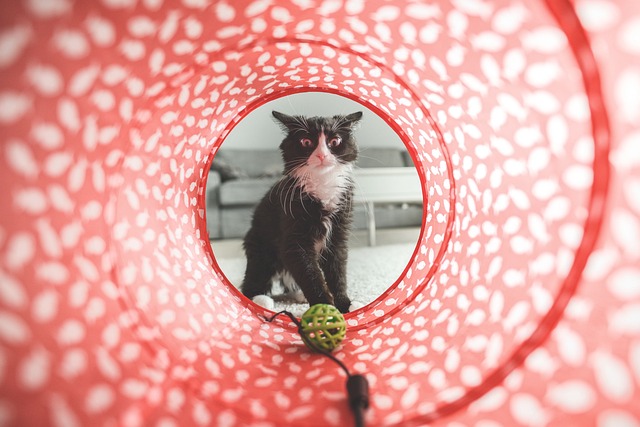
The doorbell rings, and your cat disappears. By the time your visitor has taken off their coat, the cat is safely beneath the bed and apparently planning to remain there until the entire situation has passed.
Some cats are naturally more cautious than others. A new voice, unfamiliar smell, sudden noise, or change in the household may be enough to make them retreat.
Hiding itself is not necessarily a problem. Having somewhere safe to withdraw is an important part of feline wellbeing.
The concern comes when fear becomes so frequent or intense that your cat struggles to relax, explore, eat, or take part in everyday life.
Give a Nervous Cat More Control
Make sure your cat has places where they can retreat without being disturbed. A covered bed, high shelf, hiding box, or quiet room can provide somewhere to watch the household from a safer distance.
Let your cat decide when to come out. Pulling them from a hiding place to meet visitors is likely to make the next visit feel even less safe.
Ask guests to give the cat space rather than reaching under furniture, following them, or trying to pick them up. Some cats may eventually approach; others may prefer to observe from across the room.
Gradual, positive experiences can help, but progress will not look the same for every cat. If hiding suddenly becomes much more frequent, or fear begins interfering with normal daily life, have your cat checked by a vet because pain and illness can also make cats withdraw.
Sometimes the kindest thing you can give a nervous cat is permission to say, Not right now.
9. Why Has Your Cat Become So Picky About Food?
Yesterday, your cat loved their dinner. Today, they sniff it, look at you, and walk away.
You try another flavor. The response is equally unimpressed.
Cats can certainly have strong food preferences. Texture, smell, temperature, familiarity, and even the place where they eat may affect their interest.
But there is an important difference between a cat who has always been selective and one who suddenly loses interest in food.
Dental pain, nausea, and other illnesses are among the reasons a cat may stop eating. Sometimes a cat approaches the bowl as though they want to eat but then struggles to chew, swallow, or continue.
That is not ordinary fussiness.
Treat a New Appetite Change Differently
If your cat normally eats well and suddenly refuses food, call your vet that day. A noticeable drop in appetite also deserves prompt advice, particularly in kittens, diabetic cats, or cats that seem unwell.
Cats should not go without food for prolonged periods. If a cat has eaten nothing for around 24 hours, they need veterinary attention; do not wait that long if other concerning signs are already present.
For a healthy cat who is eating enough but has always been selective, small changes may help. Keep mealtimes reasonably predictable, offer food somewhere quiet, and try gently warming wet food to make the smell more noticeable—checking that it is not hot before serving.
Introduce dietary changes gradually when possible. Some cats enjoy puzzle feeders, while others prefer a familiar bowl with no extra complication.
What you do not want is an endless cycle of replacing one food with another while overlooking a genuine loss of appetite.
10. What If Your Cats Don’t Get Along?
Two cats live in the same house. They have separate bowls, plenty of toys, and comfortable places to sleep, yet somehow one cat always seems to be waiting in the hallway whenever the other wants to pass.
There may never be a dramatic fight.
Instead, one cat starts avoiding certain rooms, hesitates near the litter box, or spends more time hiding. One watches while the other eats. A doorway quietly becomes territory that one cat no longer likes to cross.
These signs are easy to miss because we often imagine conflict as hissing, chasing, and fighting.
Some cats form close bonds, groom one another, and choose to sleep together. Others coexist peacefully without much interaction. And some find living with another cat genuinely stressful.
Tension can show up through staring, blocking access to resources, chasing, avoiding rooms, or controlling movement through the home.
Reduce Competition, Not Just Fighting
Start by looking at how each cat uses the house. Can both reach food, water, litter boxes, beds, scratching surfaces, and hiding places without having to pass the other?
When several cats share a home, providing resources in different locations can make a substantial difference. A row of bowls or litter trays together may still feel like a single resource if one cat can guard the whole area.
High places and hiding spots also give cats more ways to avoid one another. If a particular doorway or hallway repeatedly becomes a point of tension, see whether furniture or room layout can create another route.
Do not force cats to eat side by side, share a bed, or stay close together in the hope that they will eventually “get used to it.” If you are introducing a new cat, a gradual introduction is much safer than putting both animals together and hoping they sort things out.
If tension continues or one cat’s daily life is being restricted by the other, talk to your vet or a qualified feline behavior professional.
A peaceful household does not require every cat to become best friends. Sometimes being able to share a home without constantly worrying about the other cat is a very good outcome.
Understanding Your Cat Makes Everyday Life Easier
A scratched sofa, a midnight sprint, or an unexpected leap onto the kitchen counter can certainly test your patience. But those moments also tell us something about the animals we have invited into our homes.
Cats still need to scratch, climb, explore, hide, hunt through play, communicate through scent, and make choices about their surroundings. Their habits do not always fit neatly around ours, and sometimes the easiest solution begins with changing the environment rather than trying to change the cat.
Other behaviors deserve more careful attention, especially when they appear suddenly or involve eating, urination, pain, aggression, or marked changes in personality.
Getting to know your cat’s normal habits makes those changes easier to recognize. Over time, the things that once seemed mysterious may start to make a little more sense.
You may never know exactly what your cat is thinking. But learning to see the world from their point of view can make sharing it much more rewarding.
Sources & Further Reading
- Ellis, S. L. H., Rodan, I., Carney, H. C., Heath, S., Rochlitz, I., Shearburn, L. D., Sundahl, E., & Westropp, J. L. (2013). AAFP and ISFM Feline Environmental Needs Guidelines. Journal of Feline Medicine and Surgery, 15(3), 219–230.
- Rodan, I., et al. (2024). 2024 AAFP Intercat Tension Guidelines: Recognition, Prevention and Management. Journal of Feline Medicine and Surgery, 26(7).
- Cornell Feline Health Center. (n.d.). Feline Behavior Problems: House Soiling. Cornell University College of Veterinary Medicine.
- Cornell Feline Health Center. (n.d.). Feline Lower Urinary Tract Disease. Cornell University College of Veterinary Medicine.
- Cornell Feline Health Center. (n.d.). Feline Behavior Problems: Destructive Behavior. Cornell University College of Veterinary Medicine.
- Cornell Feline Health Center. (n.d.). Anorexia. Cornell University College of Veterinary Medicine.
- Cats Protection. (n.d.). Why Do Cats Scratch?. Cats Protection.
- Hotchner, T. (2007). The Cat Bible: Everything Your Cat Expects You to Know. Gotham Books.
- Johnson-Bennett, P. (2011). Think Like a Cat: How to Raise a Well-Adjusted Cat—Not a Sour Puss. Penguin Books.
Featured image by Dorothe