
A guinea pig may come running when you arrive with fresh hay, recognize the sounds of feeding time, or happily settle nearby while you sit in the room. With that kind of relationship, it is easy to wonder whether your company is enough.
For most guinea pigs, living with a compatible guinea pig is a good welfare goal. Human attention can be valuable, but another guinea pig offers forms of social contact that we cannot fully copy.
That does not mean bringing home a second guinea pig and putting the two together will automatically create a happy pair. Compatibility matters, introductions matter, and the space they eventually share matters too.
The aim is not simply to have two guinea pigs in one enclosure. It is to find a match that allows both animals to live comfortably.
Why Another Guinea Pig Can Matter
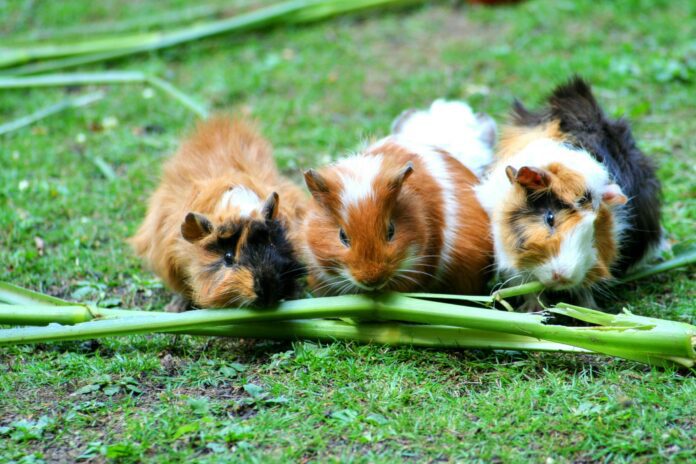
Guinea pigs are social animals. They communicate with one another, spend time near one another, and respond to the presence and behavior of other guinea pigs.
Research gives us some useful clues about how much that social contact can matter.
A UK study involving 4,590 guinea pig owners found that positive behaviors were reported more often in guinea pigs living with another guinea pig than in those housed alone. Because the study relied on owners reporting what they saw rather than changing the animals’ living arrangements experimentally, it cannot tell us that companionship caused every difference. But the pattern fits with the wider welfare recommendation that guinea pigs should usually have compatible company.
Another study approached the question differently. Female guinea pigs were given access to areas containing another guinea pig as well as an unoccupied area. They spent more time in the social areas.
That does not tell us whether any two guinea pigs will get along in a home, but it does show that social contact can be something guinea pigs actively choose.
Taken together, the research and welfare guidance give us a good reason to treat companionship as important without pretending that every pairing will work.
Choosing a Companion Is About More Than Sex
People often look for a simple formula: two females are good, two males are difficult, or a male and female will always get along.
Real pairings are not that predictable.
Sex matters for practical reasons, especially where pregnancy is possible, but personality and the animals’ reactions to one another matter just as much when it comes to whether a pair can live comfortably together.
Two females can form a good pair. Two males can too. A neutered male and a female are another common possibility.
Adult males should not automatically be dismissed as impossible to pair. In one small laboratory study, researchers formed stable pairs in 11 of 12 attempts involving unfamiliar adult males.
Those animals were living under carefully managed research conditions, so 11 out of 12 should not be treated as a household success rate. What the study does show is that unfamiliar adult males are capable of forming stable social pairs.
If you are looking for a companion, a rescue or organization experienced in guinea pig bonding may be able to help. Seeing how the animals actually respond to one another can be more useful than choosing entirely from a rule about sex or age.
What About a Male and Female?
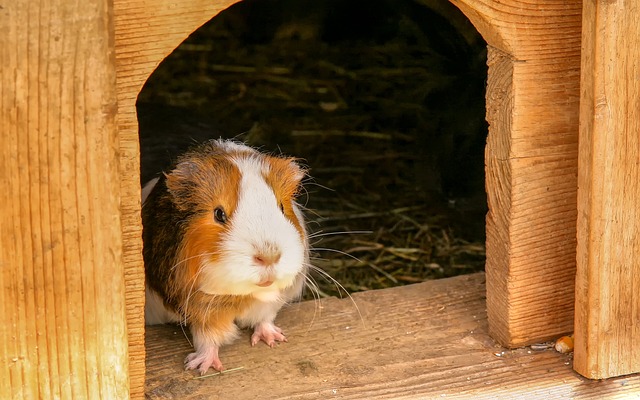
A male and female can live together successfully, but pregnancy has to be prevented unless breeding is intentional.
If they are going to share a home without breeding, the male should be neutered. There is an important catch: a male guinea pig can remain fertile for several weeks after neutering.
Blue Cross recommends waiting four to six weeks before introducing a recently neutered male to females. He should remain separate from them during that period.
Neutering solves the reproductive problem, not the compatibility problem. It does not guarantee that two particular guinea pigs will like living together.
Do Not Rush the Introduction
Imagine meeting someone for the first time and immediately being expected to share your bedroom, meals, and favorite place to relax. Guinea pigs also benefit from a more gradual introduction.
Before bringing the animals together, make sure the newcomer is healthy. Giving them separate spaces at first also allows you to start the process without forcing close contact.
Scent can be part of that introduction. Swapping some bedding or other familiar items gives each guinea pig a chance to investigate the other’s smell before a direct meeting.
When they are ready to meet, use neutral territory where possible rather than placing the newcomer directly into an enclosure the resident guinea pig already treats as its own.
Give them enough room to move around and make sure neither animal can become trapped in a corner or hide with no way out.
How Can You Tell If They Are Getting Along?
A first meeting may involve plenty of sniffing, following, movement, and noise. Not every chase or moment of tension means the pairing has failed.
Guinea pigs that are settling together may sniff one another, follow each other, eat nearby, groom, or eventually rest close together. Some chasing or mounting can also happen during introductions.
The more useful question is whether both animals can move around, eat, rest, and get away from one another without one being repeatedly frightened or harassed.
Watch more carefully if you see persistent chasing, repeated nipping, teeth chattering combined with threatening behavior, cornering, biting, or fighting. One moment does not necessarily tell you how the relationship will develop, but repeated conflict is different from a brief disagreement.
If a real fight breaks out, do not put your bare hands between the guinea pigs. Use a suitable barrier or towel to separate them more safely.
Check both animals for injuries and call your vet if either has been hurt.
After a difficult meeting, going back to an earlier stage of the introduction may help in some cases. PDSA suggests returning to scent swapping after a fight and restarting the bonding process from the beginning if an established pair falls out.
But serious fighting should not simply be treated as another normal step in bonding. If the animals have injured one another or repeated attempts lead to fear and aggression, get experienced advice before putting them together again.
Sometimes a particular match simply is not going to work.
Sharing a Home Means Having Space Apart
Even guinea pigs that get along well do not need to spend every moment side by side.
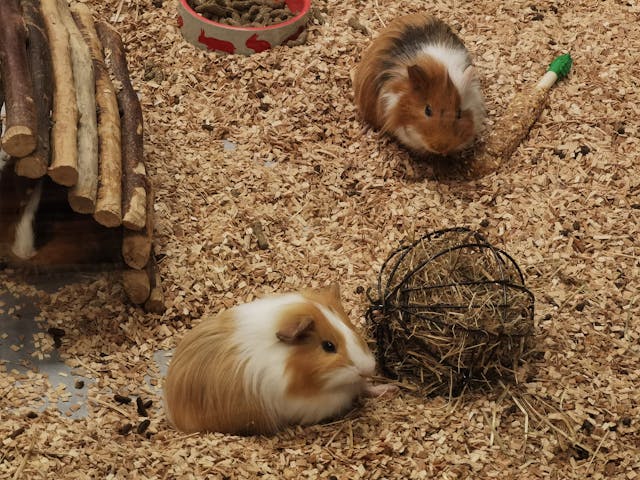
A shared enclosure should allow both animals to eat, drink, rest, hide, explore, and move away from each other when they want to.
That means thinking about usable space, not just whether two guinea pigs physically fit inside the enclosure.
The Merck Veterinary Manual recommends at least 7.5 square feet of floor space for one guinea pig, with roughly 2–4 additional square feet for each extra animal. More usable space can be valuable, especially when several animals share the same home.
The floor should be solid rather than wire, and there should be more hiding places than guinea pigs. With two animals, for example, providing at least three suitable hiding places gives them more choice than expecting both to share one shelter.
Layout matters as well.
If all the hay, water, or shelter is concentrated in one place, one guinea pig may be able to block the other. Spreading resources around can make it easier for both animals to reach what they need.
Hides with more than one entrance can also be useful. An enclosed house with a single doorway can leave one guinea pig trapped if the other blocks the exit.
A good shared home gives guinea pigs opportunities to be together and opportunities to move apart.
What If Your Guinea Pig Has to Live Alone?
Sometimes living separately is the safer option.
Two guinea pigs may repeatedly fight despite careful introductions. An animal may need temporary or long-term separation because of illness or injury. In other cases, finding a suitable match may take time.
If your guinea pig has to live alone, that does not mean their social needs disappear.
Spend time with them every day in ways they enjoy. Offer places to explore, suitable enrichment, and opportunities to interact with you without forcing attention they do not want.
Human company can become an important part of the day, but it should not automatically be treated as identical to having a compatible guinea pig companion.
If circumstances allow, it may be worth discussing the situation with an experienced rescue or a vet familiar with guinea pigs. A different match may work even when an earlier pairing did not.
At the same time, companionship should not come at the cost of constant fear, fighting, or injury. Repeatedly forcing an unsafe pairing does not improve welfare simply because two guinea pigs are technically living together.
A Good Companion Should Make Life Better
For most guinea pigs, compatible guinea pig company is worth aiming for.
But the word compatible matters.
A good match is not created simply by choosing two females, neutering a male, following a fixed introduction schedule, or putting two animals in a large enough enclosure. All of those details can matter, but the guinea pigs themselves still have a say in how well the relationship works.
Watch whether both animals can relax, eat, move around, and spend time apart without constant tension. Give them enough room and enough resources that companionship does not turn into competition.
And if a particular pair cannot live together safely, reassessing the match is better than forcing it.
The best companion is not simply another guinea pig in the enclosure. It is another guinea pig with whom your animal can share a home comfortably.
Sources & Further Reading
- Harrup, A. J., & Rooney, N. J. (2020). Current Welfare State of Pet Guinea Pigs in the UK. Veterinary Record, 186(9), 282.
- Romero-Chacón, A. M., Cardona-Restrepo, M., Peña-Bello, G., & Maldonado-Chaparro, A. A. (2025). Female Guinea Pigs Prefer Familiar Opposite-Sex Individuals but Not Familiar Same-Sex Peers. Animal Behaviour, 230, 123384.
- Xu, J. X., et al. (2024). Establishing New Isosexual Pairs in Adult Male Guinea Pigs (Cavia porcellus) to Facilitate Social Housing. Journal of the American Association for Laboratory Animal Science, 63(2), 160–171.
- RSPCA. (n.d.). Keeping Guinea Pigs Together. RSPCA.
- PDSA. (n.d.). How to Introduce Guinea Pigs. PDSA.
- Blue Cross. (n.d.). How to Introduce Guinea Pigs. Blue Cross.
- Sadar, M. J. (2026). Housing and Nutrition of Guinea Pigs. Merck Veterinary Manual.
Featured image by Pixabay

