
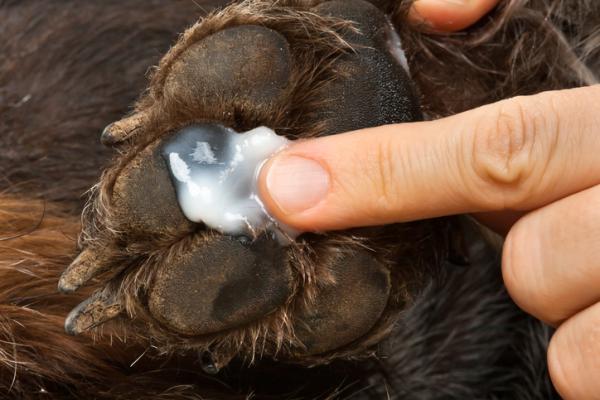
Your dog’s skin looks dry, or perhaps their paw pads feel rough. On the bathroom shelf sits a moisturizer that works perfectly well on your own skin.
It seems reasonable to wonder whether a little of the same lotion might help your dog.
Human moisturizers aren’t automatically toxic to dogs, but that doesn’t make them suitable for canine skin. The ingredients, the area being treated, the condition of the skin, and the possibility of your dog licking the product all matter.
Some lotions may cause little more than mild irritation if used accidentally. Others contain ingredients that can be harmful, particularly when swallowed.
So before reaching for that bottle, it’s worth understanding what you’re putting on your dog—and whether moisturizer is really what they need.
Why Human Moisturizers Can Be a Problem for Dogs
The main concern isn’t simply that a product was designed for humans. It’s what the formulation contains and how your dog might be exposed to it.
There are two things to consider.
First, a lotion may irritate your dog’s skin. Fragrances and other ingredients can cause problems for sensitive or already inflamed areas, although not every human moisturizer will produce the same reaction.
Second, and often more importantly, dogs may lick off whatever you apply.
Imagine rubbing lotion onto a dry-looking paw. A moment later, your dog begins licking the area. What started as a topical application has become something they’ve swallowed.
A brief lick of an ordinary moisturizer won’t necessarily cause serious harm. But a product that’s intended for external use isn’t automatically safe to ingest.
That’s why checking the actual ingredients matters more than relying on words such as gentle, sensitive, or natural.
Ingredients That Deserve Particular Attention
Some personal-care products contain ingredients that are especially concerning for dogs.
Xylitol is one example. It’s best known as a sweetener in sugar-free products, but it can also appear in cosmetics and other nonfood items. When dogs ingest a sufficient amount, xylitol can cause a dangerous drop in blood sugar and, in some cases, serious liver injury.
Camphor is another concern. It occurs in certain medicated rubs and pain-relief products rather than ordinary moisturizers. Camphor can be absorbed through the skin and should not be applied to dogs.
These examples don’t mean that every bottle of hand lotion contains dangerous ingredients. Most don’t contain camphor, for instance. But they illustrate why the product’s name or intended human use isn’t enough to establish its safety.
If your dog has swallowed a product containing xylitol, or has been exposed to one containing camphor, contact your veterinarian or an animal poison-control service immediately.
What if You’ve Already Put Human Lotion on Your Dog?
If you’ve already applied a little lotion, don’t assume something serious will happen. The appropriate response depends on the product, the amount involved, and whether your dog has licked it.
Start by preventing further licking and stop applying the product.
If there’s still lotion on the skin, gently rinse away the excess with lukewarm water. Avoid vigorous scrubbing, especially if the area is already irritated.
Then check the packaging. Keep the container or photograph the ingredient list so you can identify exactly what was used.
Contact your veterinarian promptly if the product contains an ingredient of concern, your dog may have swallowed a substantial amount, or they seem unwell. If you can’t establish what your dog swallowed, seek advice rather than guessing.
Your vet or an animal poison-control service can assess the particular formulation and exposure. Don’t try to induce vomiting or use home remedies unless you’re specifically instructed to do so.
For a small accidental application of an ordinary lotion, the outcome may be uneventful. The important thing is to assess the actual product rather than assuming that all human moisturizers carry the same risk.
Dry Skin Isn’t Always Just Dry Skin
When skin looks dry, applying moisturizer seems like the obvious solution. But the appearance of the skin doesn’t necessarily reveal what’s causing the problem.
Dry indoor air, weather conditions, irritating substances, and grooming habits may all contribute to skin changes. Allergies, parasites, infections, and other medical conditions can also produce irritation or flaking.
A patch that looks dry may therefore need something quite different from a moisturizing lotion.
Paw Pads Need Different Care
Your dog’s paw pads have a demanding job. They provide cushioning and make contact with pavement, grass, rough ground, and other surfaces every day.
Hot pavement, winter salt, abrasive terrain, and cold weather can all affect them. Some surface roughness is normal, however, and doesn’t automatically mean the pads are damaged.
It’s also important to distinguish roughness from cracking, inflammation, or pain.
A paw-pad product isn’t necessarily suitable for the skin beneath your dog’s coat, and a general skin moisturizer may not be appropriate for damaged pads.
Before applying anything, look closely at the area and consider whether your dog is licking it, avoiding putting weight on the paw, or showing signs of discomfort.
A painful, cracked, bleeding, or inflamed paw needs more attention than an ordinary rough surface.

What Should You Use Instead?
If your dog genuinely needs help with dry skin or paw pads, a product formulated for the relevant canine use is usually a better starting point than a human cosmetic.
That might mean a paw balm intended for intact pads, a dog-specific moisturizing product, or a treatment recommended by your veterinarian.
The distinction matters because not every product made for dogs has the same purpose.
A balm intended for paw pads isn’t automatically suitable for an irritated patch beneath the coat. Likewise, a general grooming product isn’t necessarily appropriate for broken or infected skin.
Read the instructions, use the product only where it’s intended, and take precautions to prevent licking when directed. Even veterinary topical products may contain ingredients that shouldn’t be swallowed.
If the skin problem is persistent or uncomfortable, ask your veterinarian what type of product, if any, would be appropriate.
Are Natural Remedies Better?
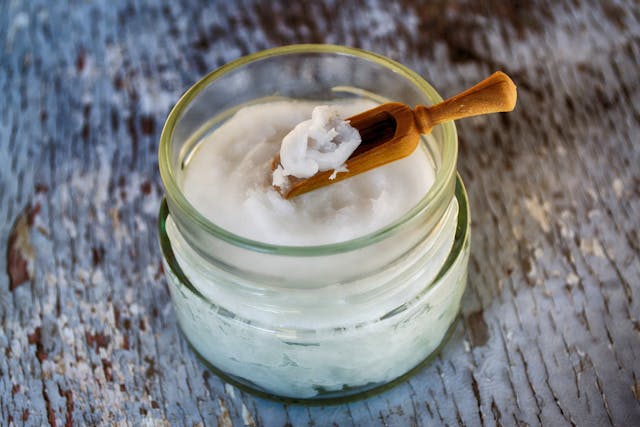
Coconut oil, shea butter, and aloe vera are often suggested as alternatives to conventional moisturizers.
Their familiarity can make them sound reassuring, but natural doesn’t automatically mean safe or effective for every dog.
Different preparations contain different ingredients, and a substance applied to the skin may still be swallowed when your dog licks it.
There’s also limited support for recommending these ingredients as general treatments for every case of dry canine skin. Something that seems soothing may do little to address the actual cause of the problem.
Rather than experimenting with several oils, creams, and home remedies, start by considering whether the skin needs a product at all.
Everyday Habits That Can Help
Sometimes the most useful skin-care step is to change what your dog’s skin comes into contact with.
Think about their environment. Have they been walking on salted pavements? Has the weather changed? Is the indoor air particularly dry? Could a cleaning product or another irritant be involved?
During winter, sidewalk salt can remain on paw pads after a walk. Rinsing the paws with clean water and drying them afterward can help remove that exposure.
In summer, avoiding excessively hot pavement protects the pads from a different source of damage. Providing suitable walking surfaces and checking the paws regularly may be more useful than applying lotion after every outing.
Keep Grooming Appropriate for Your Dog
Bathing habits can influence skin condition, too.
More frequent baths aren’t necessarily the answer to dry-looking skin. Depending on the dog and the products used, excessive bathing or unsuitable shampoos may contribute to irritation.
Use dog-appropriate grooming products and comfortably warm rather than hot water. Coat type, skin condition, and the dog’s daily activities should help determine how often bathing is needed.
There’s no universal schedule that suits every dog.
Nutrition also plays a role in maintaining healthy skin, but a dry patch isn’t proof of a dietary deficiency. A complete, balanced diet should provide the nutrients a healthy dog needs.
Adding oils or supplements without understanding the problem may be unnecessary, and changing several things at once can make it difficult to tell what’s helping.
If your dog’s skin continues to look unhealthy despite ordinary care, a veterinary assessment is more useful than building up a collection of products.

When Should You See Your Veterinarian?
An isolated patch of mildly rough-looking skin doesn’t always require immediate treatment. What matters is how the area changes and how your dog behaves.
Pay attention to repeated scratching or licking, increasing redness, scaling, or irritation. An area that spreads, keeps returning, or fails to improve deserves investigation.
Arrange a veterinary appointment if your dog has persistent itching, recurring skin changes, or an area that becomes increasingly irritated.
Seek advice more promptly if you notice painful skin, open sores, bleeding, significant swelling, or a cracked paw pad that’s affecting your dog’s comfort.
Your veterinarian may need to investigate causes such as allergies, parasites, or infections rather than simply recommend a moisturizer.
Before the appointment, it can help to note when the problem began, where it appears, whether it changes after walks or bathing, and how often your dog scratches or licks the area.
Those observations provide useful information without requiring you to identify the condition yourself.
The Right Product Depends on the Problem
A human moisturizer isn’t automatically dangerous just because it was made for people. But a product that feels gentle on your skin may irritate your dog or contain ingredients that shouldn’t be swallowed.
That’s why using human lotion without knowing its ingredients and intended purpose isn’t a good default approach.
For mild, temporary roughness, removing an obvious irritant and monitoring the area may be enough. If additional care is needed, choose something appropriate for dogs and for the particular part of the body you’re treating.
And if the skin remains irritated, becomes painful, or repeatedly develops the same problem, the priority is finding out why.
The best skin care isn’t about choosing between human, natural, or canine products. It’s about understanding what your dog’s skin actually needs.
Sources & Further Reading
- Hayes, C. (2024; updated 2025). Xylitol Toxicosis in Dogs. Merck Veterinary Manual.
- Pet Poison Helpline. (n.d.). Camphor Is Toxic to Dogs. Pet Poison Helpline.
- VCA Animal Hospitals. (n.d.). Personal Care Products and Your Pet. VCA Animal Hospitals.
- Barnes, C., Weir, M., & Ward, E. (n.d.). Applying Ointments, Creams, and Lotions on Dogs. VCA Animal Hospitals.
- ASPCA. (n.d.). Dog Grooming Tips. American Society for the Prevention of Cruelty to Animals.
- Merck Veterinary Manual. (n.d.). Itching (Pruritus) in Dogs.
- Merck Veterinary Manual. (n.d.). Dermatitis and Dermatologic Problems in Dogs.

