
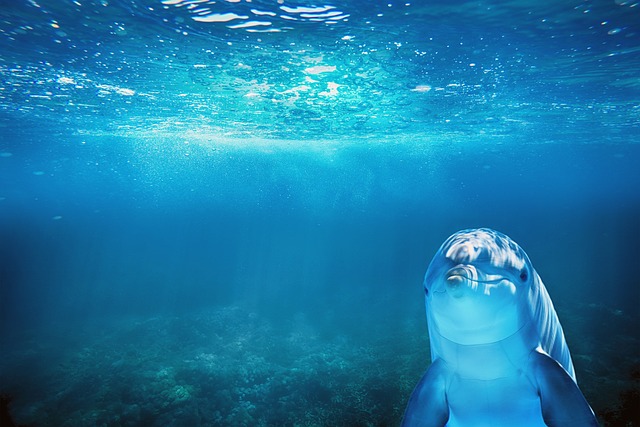
Imagine a dolphin moving slowly through the water, just beneath the surface. Its movements are gentle, and one eye appears to be closed. From a distance, it might look as though the animal is simply taking its time.
But something unusual could be happening inside its brain.
Dolphins face a challenge that most of us never have to consider when we fall asleep. They spend their entire lives in water, yet they breathe air. Even while resting, they need to reach the surface regularly, and becoming completely unresponsive to their surroundings could be dangerous.
So how does a dolphin get the sleep it needs without losing the ability to breathe, move, or respond to what is happening around it?
The answer involves one of the most remarkable adaptations scientists have discovered in marine mammals: dolphins can sleep with one half of their brain in a deeper sleep-related state while the other remains more awake. It’s a very different way of resting from what we experience, and understanding how it works reveals just how flexible sleep can be in the animal world.
The Problem With Sleeping in the Ocean
Think about what happens when you fall asleep. Your awareness of the world gradually fades, your body becomes less responsive, and your breathing continues without you having to pay attention to it.
For dolphins, falling asleep involves a different set of challenges.
Dolphins are mammals, not fish. They have lungs and breathe through a blowhole on top of their heads, which means they must regularly return to the surface for air. Their breathing can happen automatically, but they still need to coordinate it with reaching the surface.
That makes the kind of deep, largely unresponsive sleep familiar to humans difficult to imagine for an animal living entirely in water.
Breathing isn’t the only consideration. Dolphins may need to maintain their position, keep moving, or respond to changes in their surroundings. They also live in social groups, where staying near other dolphins can matter even during periods of rest.
Yet dolphins clearly need sleep, and researchers have recorded the brain activity that confirms they experience it.
The unusual part is how they manage to combine sleep with the continuing demands of life in the ocean.
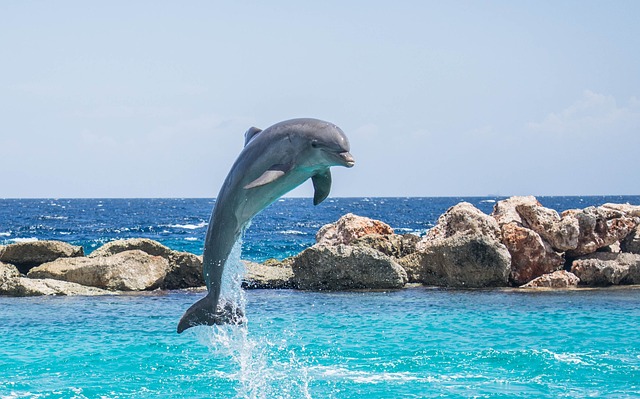
How Can Half of a Dolphin’s Brain Sleep?
The scientific name for this adaptation is unihemispheric slow-wave sleep. It sounds complicated, but the basic idea becomes much easier to understand once we look at how the brain is organized.
Like ours, a dolphin’s brain has two main halves, called the left and right cerebral hemispheres.
In humans, the slow electrical waves associated with deep sleep generally appear across both halves of the brain. When researchers study sleeping dolphins, however, they can observe a very different pattern.
One hemisphere may show the large, slow electrical waves associated with sleep, while the other displays activity more typical of an awake animal. The two sides of the brain can therefore be in different sleep-related states at the same time.
Scientists detect these differences using electroencephalography (EEG), a method of recording the brain’s electrical activity.
Imagine looking at two recordings taken from the same dolphin. On one side, the pattern shows the slow waves characteristic of sleep. On the other, the signals look much more like those recorded during wakefulness.
This is what makes unihemispheric sleep so unusual. The dolphin is experiencing genuine sleep-related brain activity without both hemispheres entering the same deep sleep state together.
Does One Half of the Brain Take Over Everything?
It’s tempting to imagine the two sides working in shifts: one goes to sleep while the other stays on duty.
That comparison is useful, but it isn’t quite how the brain works. The more active hemisphere doesn’t become a separate control center responsible for every breath, movement, or response to danger.
Researchers have shown that dolphins can breathe during unihemispheric sleep. Their breathing doesn’t require them to wake up consciously for every breath, although maintaining sufficient brain activity appears important for coordinating the movements involved.
The more wake-like hemisphere may also help the dolphin remain responsive to its surroundings, even while the other side experiences slow-wave sleep.
And the arrangement isn’t permanent. Over time, the pattern changes, allowing the other hemisphere to experience slow-wave sleep as well.
Both sides can therefore receive periods of rest without the dolphin having to become unresponsive in the same way a sleeping human often does.
Why Do Dolphins Sleep With One Eye Open?
You may have heard that dolphins sleep with one eye open. It’s one of those animal facts that sounds almost too strange to be true, but there is fascinating research behind it.
Scientists studying bottlenose dolphins and belugas have recorded brain activity while observing whether the animals’ eyes were open or closed.
They found a clear relationship between the two.
The eye opposite the hemisphere showing slow-wave sleep was usually closed or partly closed. Meanwhile, the eye opposite the more wake-like hemisphere was more often open.
In other words, the eye and the opposite side of the brain tend to follow related patterns of rest and activity.
That doesn’t mean a dolphin always sleeps with exactly one eye open. Researchers have observed variations, and eye position doesn’t perfectly reveal what is happening in the brain at every moment.
Nor does an open eye prove that a dolphin is consciously watching everything around it.
Still, the relationship suggests a possible advantage. Keeping one eye open may allow a resting dolphin to remain responsive to visual information from its surroundings.
Think about what that could mean in the ocean. A dolphin may be moving alongside companions, maintaining its position in a group, or resting in an environment where other animals can approach.
Being able to respond to some of those changes without fully waking could be valuable.
Scientists are still investigating exactly how dolphins use visual information during sleep, but the connection between eye position and brain activity offers a remarkable example of how their sleep differs from ours.
Can Dolphins Really Sleep While Swimming?
Another surprising feature of dolphin sleep is that the animal doesn’t necessarily stop moving.
A resting dolphin may swim slowly near the surface, where it can rise for air without traveling far. At other times, dolphins may rest at or near the surface with relatively little movement.
The precise behavior varies depending on the species and circumstances, but the important point is that sleep and movement are not mutually exclusive in dolphins.
For humans, sleep usually brings to mind a body lying still in bed. We tend to associate movement with being awake and stillness with being asleep.
That distinction doesn’t work nearly as well for dolphins.
A dolphin moving steadily through the water may still be experiencing slow-wave sleep in one hemisphere. Meanwhile, an animal that appears quiet near the surface isn’t necessarily asleep simply because it isn’t moving much.
Scientists therefore need to examine more than an animal’s swimming behavior to understand its sleep state.
This difference between movement and sleep becomes particularly interesting when we look at newborn dolphins, which seem to spend an astonishing amount of time swimming.
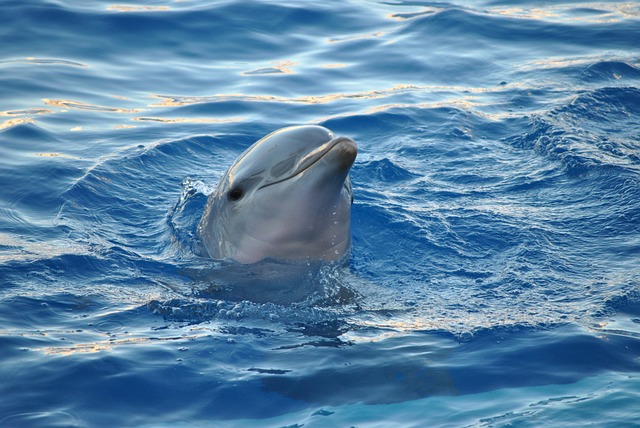
The Dolphin Babies That Seemed Never to Sleep
A newborn dolphin has an unusual introduction to the world.
Within moments of birth, it must begin breathing at the surface and keeping up with its mother. Unlike many young land mammals, it cannot simply spend most of its first days lying somewhere safe and motionless.
For researchers studying dolphin sleep, this raises an intriguing question: how do mothers and calves manage to rest during such a demanding period?
The Mystery of Almost Constant Swimming
Scientists observing bottlenose dolphin mothers and their calves noticed that the animals were extraordinarily active during the first weeks after birth.
In a study published in 2007, researchers followed three captive mother-calf pairs. They found that mothers and calves spent approximately 97–100% of their observed time swimming during the early period of the calves’ lives.
The familiar behavior of resting almost motionless at the surface, seen in many adult dolphins, was largely absent.
At first glance, the findings seemed to suggest something remarkable. Were newborn dolphins and their mothers somehow managing to go for unusually long periods with very little sleep?
That possibility attracted considerable scientific interest. In many mammals, newborns sleep for much longer than adults, so the apparently continuous activity of young dolphins seemed to challenge familiar assumptions about sleep and development.
But there was a problem with interpreting the observations.
A dolphin that keeps swimming isn’t necessarily awake.
Resting While Staying in Motion
In 2006, researchers published a study in Nature examining three bottlenose dolphin mother-calf pairs.
They observed that although the animals often opened their eyes when surfacing to breathe, one or both eyes could be closed while they were swimming underwater.
The researchers described a behavior known as swim-rest: the dolphins continued moving through the water while showing signs associated with rest.
Another research team also reported observations suggesting that young dolphins could spend considerable time resting while swimming.
These findings challenged the idea that continuous movement meant continuous wakefulness.
There’s an important distinction here. Observing eye closure and swimming behavior doesn’t tell researchers exactly how much sleep occurred in the brain. Without direct measurements of brain activity, they cannot determine every sleeping and waking period with certainty.
Nevertheless, the observations showed why it could be misleading to judge dolphin sleep using the same visible signs we might use for a sleeping land mammal.
A young dolphin may continue swimming, remain close to its mother, and still experience periods of rest.
Researchers have also suggested several possible reasons for the unusual activity of mothers and calves, including maintaining body temperature, staying together, and reducing risks in the water. These remain explanations under investigation rather than established reasons for every observed behavior.
The studies reveal something important about the challenge of understanding animal sleep: what looks like constant activity from the outside doesn’t necessarily mean constant wakefulness on the inside.
Why Did Dolphins Evolve Such an Unusual Way of Sleeping?
The need to breathe air is the most obvious reason unihemispheric sleep seems useful.
A dolphin cannot remain underwater indefinitely, so continuing to reach the surface while resting is essential. But breathing may not be the only advantage of keeping part of the brain in a more active state.
Consider the other demands of life in the ocean.
Staying Close to Other Dolphins
Dolphins are social animals, and many species spend much of their lives in groups.
Maintaining contact with companions may be important during periods of rest, particularly for mothers and calves. Unihemispheric sleep could help dolphins continue swimming or respond to nearby animals without fully interrupting their rest.
The relationship between eye position and brain activity is especially interesting in this context. An open eye might help an animal remain oriented toward a companion while the opposite hemisphere experiences slow-wave sleep.
However, that possibility doesn’t mean dolphins are consciously watching over their companions throughout every sleeping period.
Remaining Responsive to Danger
The ocean also contains potential threats.
An animal that becomes completely unresponsive may be less able to react to approaching predators or changes in its surroundings. Maintaining some responsiveness during sleep could therefore offer a survival advantage.
Researchers have proposed this as one possible function of unihemispheric sleep, although it hasn’t been established as the reason the adaptation originally evolved.
The distinction matters because a biological trait can serve several useful functions without all of them having driven its evolution.
Keeping Warm in the Water
There’s another possible explanation that is less obvious: body temperature.
Water removes heat from a body much more efficiently than air. For a warm-blooded mammal living entirely in the ocean, managing heat loss is an important challenge.
Some researchers have proposed that unihemispheric sleep and the ability to maintain movement during rest may help cetaceans regulate their temperature.
This idea has received particular attention as a possible evolutionary explanation for their unusual sleep patterns.
Breathing, movement, responsiveness, and temperature regulation are not competing explanations in the sense that only one can matter. An adaptation may provide several advantages at once.
What remains difficult is determining which pressures originally shaped it.
For now, unihemispheric sleep appears closely connected to the challenges of being a warm-blooded, air-breathing mammal that never leaves the water.
Are Dolphins the Only Animals That Sleep This Way?
Not at all. Dolphins are among the best-known examples, but unihemispheric sleep has also been documented in other cetaceans, including belugas and orcas.
Related sleep patterns occur in some birds and marine mammals, although the details differ between species.
One particularly interesting comparison comes from the northern fur seal.
Unlike dolphins, northern fur seals divide their lives between land and water. This gives researchers an unusual opportunity to examine how the same animal sleeps in two different environments.
When fur seals sleep on land, their brain activity often resembles the more familiar mammalian pattern, with slow-wave sleep occurring across both hemispheres.
In water, however, they can show strongly asymmetrical brain activity. One hemisphere enters a deeper sleep-related state while the other remains more wake-like.
Their behavior changes too. While resting in water, fur seals can maintain movements that help them hold a stable position, and they may briefly open one eye.
The contrast is revealing because it shows that an animal’s environment can influence how it sleeps.
On land, a fur seal can rest without needing to swim or maintain its position at the surface. In water, those demands change, and so can its pattern of sleep.
Dolphins don’t have the option of coming ashore to rest. Their sleep is adapted to a life spent entirely in the water.
The comparison helps illustrate a broader point: although sleep is widespread across the animal kingdom, it doesn’t have to look or function identically in every species.
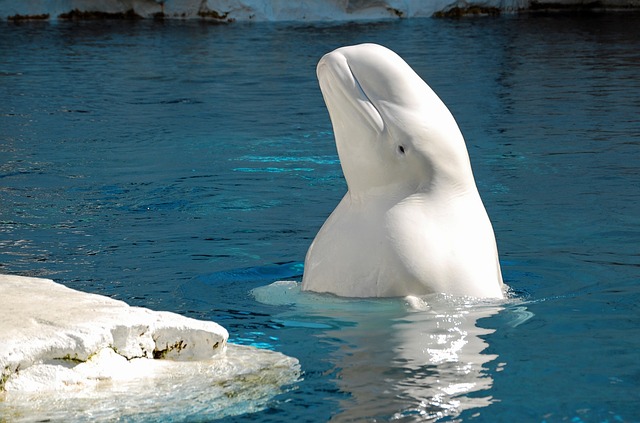
Do Dolphins Experience REM Sleep or Dream Like Humans?
There’s one more important difference between dolphin sleep and our own.
Human sleep includes several stages. One of them is rapid eye movement (REM) sleep, named for the characteristic eye movements that occur during this phase.
REM sleep is strongly associated with vivid dreaming in humans, although dreams can occur during other stages as well.
In dolphins and other cetaceans studied so far, researchers have found little evidence of the typical REM sleep seen in most land mammals. It appears to be extremely limited or possibly absent.
That makes their sleep unusual even among mammals.
But does it mean dolphins never dream?
We don’t know.
Scientists can measure electrical activity in the brain, observe eye movements, and compare sleep patterns across species. What they cannot do is ask a dolphin whether it experienced a dream or what that dream might have contained.
The absence of familiar REM sleep patterns doesn’t, by itself, settle the question of whether dolphins have experiences comparable to dreaming.
What we can say is that dolphin sleep differs substantially from the human pattern, and researchers are still investigating what those differences mean for the functions of sleep.
This is another reason studying animals with unusual sleeping habits is so valuable. Their biology challenges assumptions that can seem obvious when we consider only our own experience.
Sleeping Without Leaving the Ocean Behind
Imagine that dolphin again, moving slowly beneath the surface. One eye may be closed, and its swimming may look effortless.
Inside its brain, one hemisphere could be showing the slow electrical waves of sleep while the other remains in a more wake-like state. The animal can continue moving, reach the surface for air, and retain some ability to respond to its surroundings.
Over time, the balance of sleep-related activity between the two hemispheres changes, allowing both sides to experience periods of rest.
It’s a very different picture from the one we usually associate with a sleeping animal.
There is still much scientists want to understand, from the role of brain activity in breathing and movement to the possible evolutionary advantages of this unusual arrangement. Even the behavior of newborn dolphins has shown how difficult it can be to recognize sleep when an animal doesn’t become still.
But the central discovery is already remarkable.
Dolphins need sleep just as other mammals do. What makes them extraordinary is not that they’ve escaped the need for rest, but that they can rest while continuing to meet the demands of life in the ocean.
Sources & Further Reading
- Lyamin, O. I., Manger, P. R., Ridgway, S. H., Mukhametov, L. M., & Siegel, J. M. (2008). Cetacean Sleep: An Unusual Form of Mammalian Sleep. Neuroscience & Biobehavioral Reviews, 32(8), 1451–1484.
- Lyamin, O. I., Mukhametov, L. M., & Siegel, J. M. (2004). Relationship Between Sleep and Eye State in Cetaceans and Pinnipeds. Archives Italiennes de Biologie, 142(4), 557–568.
- Lyamin, O. I., Pryaslova, J., Kosenko, P., & Siegel, J. M. (2007). Behavioral Aspects of Sleep in Bottlenose Dolphin Mothers and Their Calves. Physiology & Behavior, 92(4), 725–733.
- Sekiguchi, Y., Arai, K., & Kohshima, S. (2006). Sleep in Continuously Active Dolphins. Nature, 441, E9–E10.
- Gnone, G., Moriconi, T., & Gambini, G. (2006). Activity and Sleep in Dolphins. Nature, 441, E10–E11.
- Lyamin, O. I., Mukhametov, L. M., & Siegel, J. M. (2017). Sleep in the Northern Fur Seal. Current Opinion in Neurobiology, 44, 144–151.
- NOAA Fisheries. (n.d.). Question of the Week: Dolphins and Whales on the High Seas. NOAA Fisheries.

