

The first time you hear that a female ferret can become seriously ill simply because she stays in heat, it sounds strange. After all, going into heat is a normal part of reproduction. Why should it become dangerous?
The answer lies in an unusual part of ferret biology.
Female ferrets are induced ovulators, which means mating normally triggers ovulation. If that does not happen, an intact female can remain in heat for a long time. The longer this continues, the more prolonged exposure to high estrogen levels can become a problem.
Male ferrets have a different story. They do not face the same estrogen-related risk, but their hormones affect breeding behavior, urine marking, and that unmistakable ferret smell.
And today, surgery is not the only option for managing reproduction. Hormonal implants are also used in ferrets, which makes the decision a little more complicated than simply asking when to spay or neuter.
Why Staying in Heat Can Be Dangerous for Female Ferrets
Estrogen is a normal hormone and an important part of a female ferret’s reproductive cycle. The problem is not that estrogen is present, but that its levels can stay high when a female remains in heat for too long.
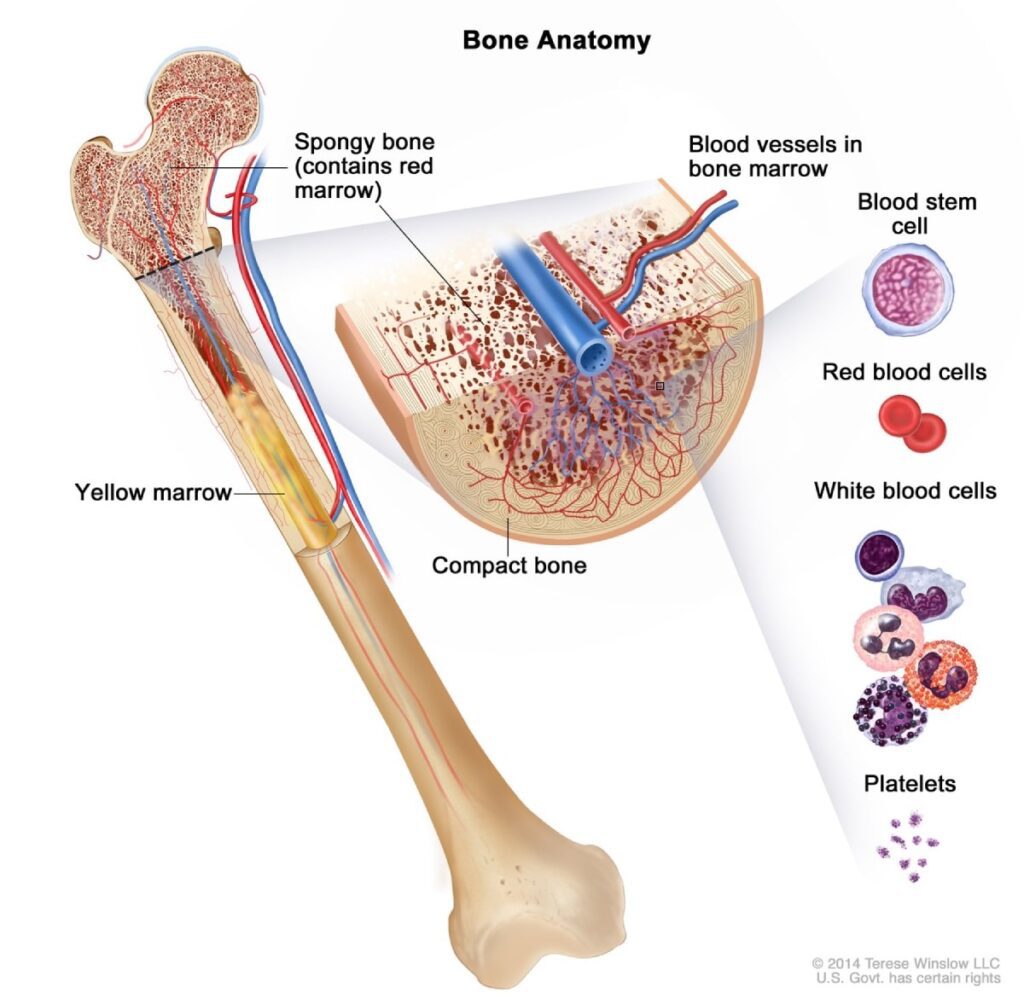
That prolonged exposure can suppress the bone marrow, the tissue responsible for making blood cells.
This can lead to estrogen-induced bone marrow suppression, sometimes described as aplastic anemia or hyperestrogenism-associated anemia.
It does not happen every time a female goes into heat. But when it does happen, it can become severe and even life-threatening. That is why an intact female needs a plan that prevents her from remaining in heat indefinitely.
What Does Estrogen Have to Do With Blood Cells?
Bone marrow makes several types of blood cells, and each has an important job.
Red blood cells carry oxygen around the body. White blood cells help fight infection. Platelets help control bleeding.
When high estrogen levels suppress the bone marrow, production of all three can fall.
A shortage of red blood cells can cause anemia, leaving a ferret weak and tired. Too few white blood cells can make it harder to fight infections, while too few platelets can increase the risk of bruising and bleeding.
If the problem continues, the combined effects can become very serious.
A swollen vulva is one obvious sign that an intact female is in heat. If she stays in heat, contact your vet so the heat can be managed before complications develop. If she becomes weak, has very pale gums, or shows unexplained bleeding, seek urgent veterinary care, as these can be signs of severe anemia or problems with blood clotting.
The aim is to manage her reproductive cycle before prolonged estrogen exposure has a chance to damage blood-cell production.
Male Ferrets Have a Different Story
Male ferrets do not go into heat and do not face the same estrogen-related bone marrow problem.
Their reproductive hormones are still very noticeable, though.
During the breeding season, an intact male can develop a much stronger musky smell. Urine marking and other breeding-related behaviors may also become more obvious.
Neutering or suppressing reproductive hormones can reduce some of these changes, although the result varies from one ferret to another.
It is also worth remembering that ferrets naturally have a musky odor. Neutering does not turn a ferret into an odor-free animal.
So the reasons for treating males and females are not quite the same. For a female, preventing prolonged heat can protect her from a serious medical problem. For a male, the decision is more likely to involve breeding, seasonal behavior, odor, and how his hormones are going to be managed.
When Should You Start Thinking About It?
Ferrets can reach sexual maturity at around four to eight months of age, so this is something worth discussing while a ferret is still young.
That is especially important with females. You do not want the first serious conversation about reproductive care to happen after an intact female has already remained in heat for too long.
But there is no single perfect age or single approach that suits every ferret.
The best timing can depend on sex, age, health, whether breeding is intended, and whether you are considering surgery or hormonal treatment. Veterinary practice also differs between countries, so the options commonly offered in one place may not be the same somewhere else.
A vet who regularly treats ferrets can help you plan before the breeding season creates a problem.
Surgery or a Hormonal Implant?
For many owners, spaying or neutering immediately means surgery.
In females, surgical spaying prevents the ovarian cycle that can lead to prolonged heat. In males, castration prevents reproduction and removes the main source of testicular hormones.
Surgery is intended to be permanent.
Ferrets also have another option: medical suppression of reproductive hormones.
One approach uses a long-acting implant containing deslorelin. It works through the hormonal system that controls reproductive activity and can suppress that activity in both male and female ferrets without removing the reproductive organs.
Unlike surgery, however, an implant does not last forever.
Research in pet ferrets has found considerable variation in how long suppression lasts, so an implant needs a follow-up plan. It should not be treated as something that can be placed once and then forgotten about indefinitely.
There is also an important detail for females. After a deslorelin implant is placed, some females can briefly show signs of estrus before hormone suppression takes effect.
That makes timing important, particularly if the ferret is approaching the breeding season or is already in heat.
If an implant is being considered, ask your vet how its effect will be monitored, roughly when another implant may be needed, and what you should do if your female shows signs of heat after it is placed.
Is Neutering Linked to Adrenal Disease?
This is where the decision can start to feel less straightforward.
Ferrets can develop adrenal disease in which the adrenal glands produce abnormal levels of sex hormones. Signs can include hair loss, itching, a swollen vulva in a spayed female, and changes in sexual or territorial behavior.
Studies have found a link between gonadectomy and adrenal disease in ferrets, and some research has also found a relationship between younger age at neutering and younger age when adrenal disease appears.
That finding is worth taking seriously, but it does not mean that every surgically neutered ferret will develop adrenal disease or that surgery alone explains why the disease occurs.
Ferret adrenal disease has a more complicated biology than that, and researchers have continued to investigate the role of hormonal changes after gonadectomy.
Concerns about adrenal disease are one reason deslorelin implants have become an important alternative to discuss.
But an implant is not automatically the best choice for every ferret either.
For an intact female, there is also a much more immediate problem to consider: leaving her reproductive cycle unmanaged can allow prolonged heat and dangerous estrogen exposure.
So the choice is not simply between “surgery with risks” and “doing nothing.” The real question is how to manage reproduction and hormones in a way that makes sense for this particular ferret.
How Do You Decide What Is Right for Your Ferret?
Start with the problem you are actually trying to solve.
For a young female, the priority is making sure she cannot remain in heat long enough for estrogen to damage her bone marrow.
For a male, the conversation may focus more on breeding plans, seasonal behavior, odor, and whether permanent or temporary hormone suppression makes sense.
Then look at the available options with a vet who knows ferrets.
Useful questions include:
- Is surgery or a hormonal implant more suitable for this ferret, and why?
- If an implant is used, how long is it expected to work and how will we know when another is needed?
- If my female enters heat, what should I do?
- Could she briefly come into heat after an implant is placed?
- If surgery is being considered, how should the possible link with adrenal disease affect the decision?
- Does my ferret’s age or health change the timing or the options?
- If breeding is planned, how will prolonged heat be avoided safely?
There does not have to be one answer for every ferret.
What matters is having a plan before reproductive hormones create a problem, rather than waiting until the animal is already unwell.
A Small Animal With Some Unusual Biology
Ferrets spend plenty of time making their owners laugh, stealing things they should not have, and squeezing into places that looked far too small for them.
Their reproductive biology is less obvious, but it is an important part of caring for them.
For females, prolonged heat can lead to dangerous bone marrow suppression. Males face a different set of considerations involving breeding and seasonal hormone-driven behavior. Surgery can provide a permanent solution, while hormonal implants offer another way to suppress reproductive activity.
Neither option should be chosen simply because it is the one you have always heard of.
For a female ferret in particular, preventing prolonged heat is essential. The wider decision is how to do that in a way that fits her health, age, circumstances, and long-term care.
Sources & Further Reading
- Elsevier. (n.d.). Hyperestrogenism-Associated Anemia. Clinical Veterinary Advisor: Birds and Exotic Pets.
- Merck Veterinary Manual. (n.d.). Management of Ferrets. Merck Veterinary Manual.
- Merck Veterinary Manual. (n.d.). Breeding and Reproduction of Ferrets. Merck Veterinary Manual.
- van Zeeland, Y. R. A., Pabon, M., Roest, J., & Schoemaker, N. J. (2014). Use of a GnRH Agonist Implant as Alternative for Surgical Neutering in Pet Ferrets. Veterinary Record, 175(3), 66.
- Di Girolamo, N., & Huynh, M. (2020). Disorders of the Urinary and Reproductive Systems in Ferrets. Ferrets, Rabbits, and Rodents: Clinical Medicine and Surgery, 39–54.
- Schoemaker, N. J., Schuurmans, M., Moorman, H., & Lumeij, J. T. (2000). Correlation Between Age at Neutering and Age at Onset of Hyperadrenocorticism in Ferrets. Journal of the American Veterinary Medical Association, 216(2), 195–197.
- Quesenberry, K., Mans, C., Orcutt, C., & Carpenter, J. W. (Eds.). (2020). Ferrets, Rabbits, and Rodents: Clinical Medicine and Surgery (4th ed.). Elsevier.
Featured image by Angela