
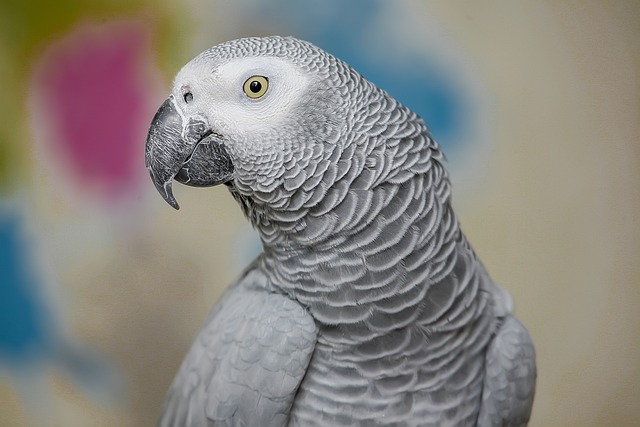
An African Grey may approach breakfast with very clear priorities. Familiar seeds come first, perhaps followed by a favorite piece of fruit, while the unfamiliar vegetable gets a suspicious look and remains exactly where you left it.
That selectiveness is part of living with a parrot. But a bird enjoying its food and a bird receiving balanced nutrition are not necessarily the same thing. Over a long life, the pattern repeated in the bowl matters far more than any single meal.
So what should an African Grey actually eat? A suitable formulated pellet can provide the nutritional foundation, while vegetables and greens add variety and other suitable foods take supporting roles. The proportions will not look identical for every bird, and what matters is not simply what you offer, but what your parrot actually eats.
Why Seeds Should Not Be the Foundation of the Diet
Seeds are familiar foods for many parrots, and African Greys can develop strong preferences for particular kinds. Sunflower seeds, for example, may disappear from a bowl long before less exciting options receive any attention.
The problem is not that every seed is unhealthy. It is that a seed-heavy diet provides a narrow nutritional foundation. A parrot can eat enthusiastically and still receive an unbalanced mix of nutrients if most of its intake comes from a limited selection of favorite seeds.
Veterinary feeding guidance commonly recommends formulated pellets as the main part of the diet. They provide a more consistent nutritional profile and make selective eating more difficult. General African Grey feeding guidance often places pellets at around 75–80% of the diet, although that figure is better treated as a broad reference than as a precise prescription for every bird.
Pellets do not make fresh foods unnecessary. Vegetables, greens, and other suitable foods add variety in flavor, texture, and presentation while contributing to the overall diet.
The aim is not to eliminate every seed. It is to stop a strong preference for seeds from deciding the nutritional quality of everything the bird eats.
Changing to Pellets Takes Time
A parrot that has spent years eating mostly seeds may not immediately recognize pellets as food. Removing the familiar diet abruptly can therefore create a much more serious problem than simply having a stubborn bird at mealtime.
Make the transition gradually. Keep checking that your African Grey is eating as you introduce pellets and reduce the familiar foods over time. Pay attention to what actually disappears from the bowl rather than assuming that food offered is food consumed.
Weight can provide another useful check during a major diet change. Regular weighing on an accurate gram scale can help reveal an unintended drop while the bird is learning to accept new foods. If your African Grey is not reliably eating the new diet, is losing weight, or the transition is proving difficult, an avian veterinarian can help you adjust the approach.
There is no benefit in winning a battle over pellets if the bird is not eating enough along the way.
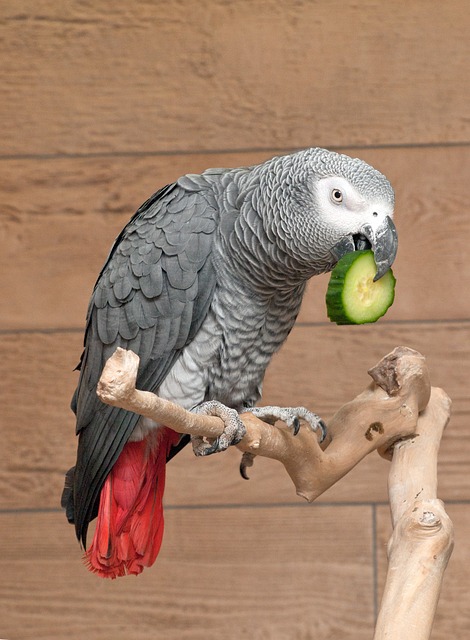
Vegetables Matter—Even If Your Parrot Disagrees
Carrots, sweet peppers, dark leafy greens, and other suitable vegetables can bring useful nutrients as well as color and variety to an African Grey’s meals.
Vitamin A deserves particular attention because African Greys can be vulnerable to deficiency. Orange, red, yellow, and dark green vegetables can contribute useful dietary sources as part of an appropriate overall feeding plan.
That does not make a particular vegetable a treatment for poor feathers, low energy, or another health problem. Those signs can have many causes and deserve a broader look at the bird’s diet and health.
There is also a practical complication: nutritious food only contributes to the diet if the bird eats it.
A parrot may ignore carrot today and investigate it after repeated exposure, especially when you offer it without pressure and in different forms. One bird may prefer small pieces, while another becomes interested only when given something large enough to hold and dismantle.
There is no magic number of attempts and no presentation trick that works for every parrot. Familiarity can take time, so persistence is more useful than turning every rejected vegetable into a contest.
Where Does Fruit Fit In?
Fruit can be an enjoyable part of the menu. Apples, figs, mangoes, and other suitable fruits offer different flavors and textures, and many parrots accept them more enthusiastically than vegetables.
That enthusiasm is one reason fruit should not become the main fresh food. Fruit generally contains more water and sugar than many vegetables and greens, so it is better used as a smaller part of the overall diet.
African Grey feeding guidance commonly places fruit at around 10% or less. The precise figure matters less than the hierarchy: vegetables and greens should not be pushed aside because the bird would happily choose sweeter options instead.
Fruit does not need to be treated as forbidden. It simply has a different role in the menu.
A Few Foods Should Stay Off the Menu
Not every food that is safe for people belongs in a parrot’s bowl. Do not feed birds avocado, chocolate, caffeinated products such as coffee or tea, or alcoholic drinks.
This does not require turning every meal into a search for hidden dangers. Most of the diet should already be built around appropriate formulated food and suitable fresh foods, which makes questionable human foods easier to leave out altogether.
If your parrot eats something you suspect may be toxic, contact an avian veterinarian or animal poison service rather than waiting for symptoms to appear.
Does an African Grey Need a Different Diet During Molting?
When feathers begin appearing around the cage, it is natural to wonder whether the menu needs to change too. Growing replacement feathers requires nutrients, including protein and amino acids such as cysteine.
What does not follow is that every molt requires a special supplement or one particular food. A nutritionally sound diet throughout the year gives a molting bird a better foundation than trying to correct an assumed deficiency whenever feathers start to drop.
Claims that sulfur supplements or foods such as wheat will improve feather growth should therefore not be treated as a general feeding strategy. Nutrition works as a system rather than as a collection of ingredients assigned to individual body parts.
If feather quality changes noticeably, the molt seems unusual, or the bird’s general condition changes at the same time, an avian veterinarian can help determine whether nutrition, disease, feather damage, or another factor deserves attention.
Why Calcium Deserves Special Attention
Calcium often comes up in discussions of African Grey nutrition for good reason. These parrots can be particularly vulnerable to problems with calcium balance.
But putting a calcium-rich food into the bowl is not the same as correcting that balance. Calcium intake interacts with other parts of nutrition and with the bird’s health, so the broader diet matters.
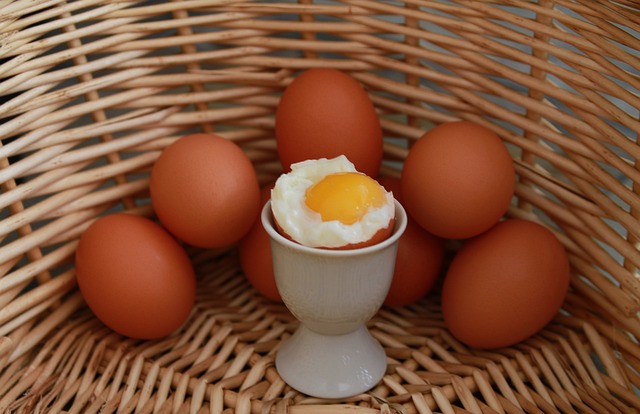
Cooked egg can occasionally form part of a varied menu. Regularly feeding egg and shell as a standard calcium strategy, however, should not replace an assessment of what the bird is receiving from its overall diet.
The same principle applies to supplements. If you suspect calcium deficiency or are considering supplementation, an avian veterinarian can assess the bird and its diet rather than relying on one ingredient to solve the problem.
What Could a Balanced Daily Menu Look Like?
Dietary percentages can be useful, but they can also create a false sense of precision. Feeding recommendations do not always define percentages in exactly the same way, and a bowl containing the mathematically correct proportions is not necessarily what the bird ends up eating.
It is often more useful to think about what role each part of the menu plays:
– Main foundation: A suitable formulated pellet diet chosen for the bird and used as the nutritional base.
– Regular fresh foods: A varied selection of appropriate vegetables, leafy greens, legumes, and other suitable plant foods.
– Smaller additions: Fruit, adding variety without displacing vegetables and greens.
– Occasional extras: Seeds and foods such as cooked egg rather than allowing them to become the basis of the diet.
A day’s offering might therefore combine the bird’s usual formulated food with several vegetables or greens, some fruit, and occasional extras. That is a picture of the hierarchy, not a fixed recipe.
The appropriate amount depends on the bird, the pellet being used, health, activity, and appetite. Most importantly, look at what the bird actually consumes.
An African Grey can turn a carefully planned bowl into a very different diet by eating only the favorite pieces. The leftovers can tell you almost as much as the empty bowl.
What About Supplements?
Once calcium, vitamin A, amino acids, and other nutrients enter the conversation, adding a supplement can sound like a sensible extra layer of protection.
It is not always one. A bird receiving an appropriately balanced diet may not need routine vitamin or mineral supplementation, and excessive amounts of some nutrients can create problems rather than prevent them.
Supplements do have legitimate uses when there is an identified need. The distinction is between supplementing for a reason and adding products routinely because more nutrients seem as though they ought to mean better nutrition.
An avian veterinarian can help decide whether supplementation is appropriate, particularly when there is a health concern, suspected deficiency, unusual physiological demand, or substantial change in the bird’s diet.
Fresh Food Also Needs to Stay Fresh
Choosing suitable food is only part of feeding it safely. Fresh vegetables, fruit, cooked foods, and other perishables should not remain in the bowl indefinitely.
Remove uneaten fresh food before it spoils, with particular care in warm conditions. Food and water bowls also need regular cleaning so that yesterday’s leftovers do not become part of today’s meal.
Always provide fresh, clean water.
These are simple details, but nutrition depends on how food is handled as well as on what goes into the bowl.
Looking Beyond What’s in the Bowl
African Greys can have wonderfully persistent opinions about food. The bird may accept a familiar seed without hesitation, then inspect, reject, or throw the carefully chosen vegetable somewhere you did not intend it to go.
A balanced diet has to work with that reality rather than pretend it does not exist.
Pellets can provide a consistent nutritional foundation. Vegetables and greens add useful variety. Fruit and seeds can remain part of the menu without dominating it, while questions about calcium, supplements, or unusual nutritional needs make more sense when considered in the context of everything the bird eats.
The transition matters too. Changing a long-established diet gradually, checking what is actually being consumed, and keeping an eye on body weight are more useful than simply replacing one bowl with another and hoping the parrot agrees.
Meals can also be part of how an African Grey investigates its environment. Different colors, textures, shapes, and ways of presenting suitable foods give a curious bird something to examine, hold, tear apart, and taste.
Over the course of an African Grey’s long life, no single breakfast needs to be perfect. What matters is the pattern built across thousands of them: food that meets nutritional needs, enough flexibility to work for the individual bird, and a feeding routine that leaves room for the curiosity and strong preferences that make African Greys themselves.
Sources & Further Reading
- Donoghue, S., & Langenberg, J. (1994). Clinical Nutrition of Exotic Pets. Australian Veterinary Journal, 71(10), 337–341.
- VCA Animal Hospitals. (n.d.). African Grey Parrots – Feeding. VCA Animal Hospitals.
- Merck Veterinary Manual. (n.d.). Nutritional Diseases of Pet Birds. Merck Veterinary Manual.
- Merck Veterinary Manual. (n.d.). Nutrition in Psittacines. Merck Veterinary Manual.
Featured image by Akbar Nemati

