
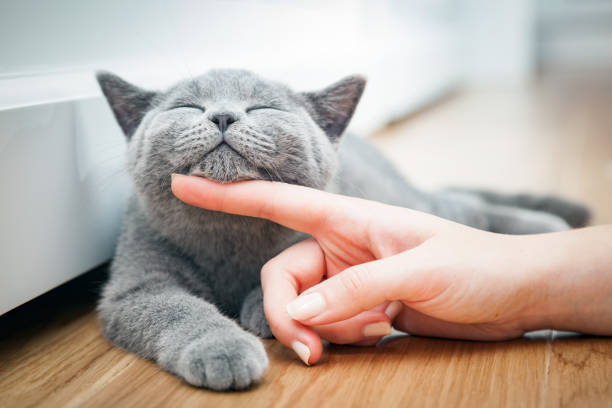
You leave for work, close the door, and get on with your day. When you come home, your cat might greet you with a few loud meows, follow you from room to room, or barely look up from a favorite sleeping spot.
Cats have a reputation for being independent, so it is easy to assume that being alone does not bother them. But cats can form close relationships with people, and some do seem to behave differently when someone they know well is away.
So, can cats get lonely?
Possibly. But we cannot look at one behavior and know that loneliness is the reason. A cat who meows more, scratches furniture, urinates outside the litter box, or suddenly becomes clingier may be reacting to time alone, but the same behavior can happen for many other reasons.
What matters most is whether something has changed for your cat, when it happens, and what else is going on.
Can Being Left Alone Affect Cats?
Research suggests that time apart from people may affect some cats.
In one survey, owners reported things such as more vocalizing, destructive behavior, and urinating outside the litter box around periods of separation. Another study found that cats did not all react in the same way; instead of one clear pattern, several different types of behavior appeared.
That makes sense when you think about how different cats can be. One cat may spend most of the day sleeping and seem perfectly comfortable with the household routine. Another may react when a familiar person suddenly starts spending much more time away.
These studies cannot tell us exactly what a cat is feeling, and they do not tell us how common separation problems are in all cats. But they do suggest that being away from a familiar person can matter to some of them.
What Changes Might Be Worth Noticing?
Imagine coming home to find urine outside the litter box or something knocked from a shelf. Because it happened while you were away, it is tempting to blame your absence straight away.
But the timing does not tell you the whole story.
Things worth paying attention to include:
- More vocalizing around departures or while the cat is alone
- Urinating or defecating outside the litter box
- New scratching or destructive behavior
- Excessive grooming that leaves thin or bald areas
- Eating less when a familiar person is away
- Changes in activity or restlessness
- Becoming much more demanding of attention after a change in routine
The key word is change.
A cat who has always followed you around the house may simply enjoy your company. But if a cat who usually keeps to themselves suddenly starts becoming very upset around departures, that is more useful information.
Look for a pattern. Does it happen mainly when you leave? Does it happen when someone is home too? Did it begin after a new work schedule, a move, the loss of another pet, or some other change at home?
Those details can tell you more than the behavior on its own.
When the Problem May Be Medical
Not every behavior change is about stress or loneliness.
A cat who suddenly starts urinating outside the litter box may have a urinary problem or another health issue. Changes in grooming can sometimes be linked to pain, itching, or skin problems. Vomiting, regurgitation, or eating less should not simply be explained as a cat “missing you.”
If your cat suddenly changes the way they eat, groom, use the litter box, or behave, talk to your vet—especially if the change keeps happening or comes with other signs that something is wrong.
Even if the behavior began at the same time as a change in your schedule, that does not prove your absence is the cause. It is still worth checking for health problems first.
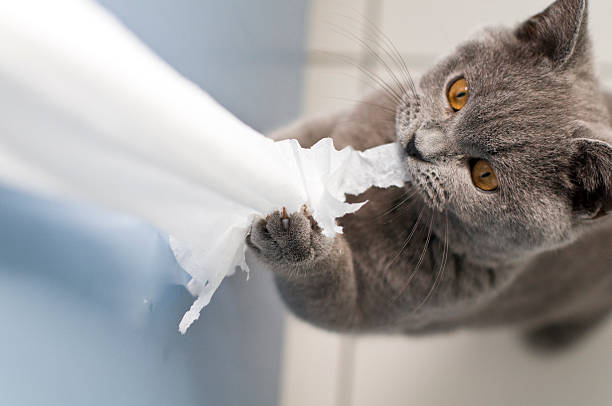
Making Time Alone More Interesting
Whether or not your cat struggles with being alone, there are simple ways to make the day more interesting.
If your cat likes watching the world outside, a secure window perch can give them plenty to look at. Birds, people, moving leaves, and activity outside can provide a kind of everyday cat TV.
Other cats may prefer something more active. Food puzzles can encourage searching and problem-solving, while safe toys to bat or chase can give them something to do during the day.
The important thing is to notice what your cat actually enjoys. A floor covered in toys does not help much if your cat ignores all of them.
Some cats love puzzle feeders. Others are happier with a cardboard box, a favorite perch, or a toy that gets rotated in and out so it does not become boring.
Be careful with toys that have strings or loose parts. Those are better saved for playtime when you are there to supervise.
Enrichment can make the day more interesting, but it is not a cure for a cat who is genuinely struggling. If the behavior is new, persistent, or getting worse, toys alone are unlikely to solve the problem.
Why Time Together Still Matters
Making the home more interesting while you are away is only part of the picture. Time together matters too.
If your cat likes chasing things, a wand toy can turn a few minutes into a proper game. Another cat may prefer brushing, gentle handling, exploring a box while you sit nearby, or simply resting next to you.
There is no perfect number of minutes that every cat needs. Age, health, personality, and individual preferences all make a difference.
A reasonably predictable routine can help too. Feeding, play, and quiet time do not need to happen at exactly the same minute every day, but familiar patterns can make everyday life feel more settled.
And if you are worried that your cat needs company, getting another cat is not automatically the answer.
Some cats enjoy living with other cats. Others find it stressful, especially if introductions are rushed or the cats are not a good match. Another cat also cannot simply replace the bond your cat has with you.
Start with the cat you already know.
What If Your Schedule Has Changed?
Sometimes the biggest clue is a change in the cat’s routine rather than one particular behavior.
Maybe you have gone back to working in an office after being home every day. Perhaps your working hours are longer, someone has moved out, or the household routine has changed.
If your cat starts behaving differently around the same time, that is worth paying attention to. It does not prove that being alone is the cause, but it gives you useful context.
Keep the parts of the routine you can control reasonably steady. Make sure food, water, litter boxes, resting places, hiding spots, and things to do are easy to reach. And when you are home, give your cat the kind of interaction they actually enjoy.
If the change continues or becomes more worrying, talk to your vet rather than trying to guess the reason.
So, Can Cats Get Lonely?
Cats can form strong relationships with people, and some do behave differently when those people are away.
What we cannot do is look at one meow, one scratched sofa, or one enthusiastic greeting and know that loneliness is the reason.
The best thing you can do is know what is normal for your cat and notice when that changes.
Pay attention to when the behavior happens, what else has changed at home, and whether there could be a health problem. Give your cat things to do, places to explore, and time with you in ways they actually enjoy.
Cats may be independent in many ways, but that does not mean people are unimportant to them. The individual cat in front of you matters more than the stereotype.
Sources & Further Reading
- de Souza Machado, D., Oliveira, P. M. B., Machado, J. C., Ceballos, M. C., & Sant’Anna, A. C. (2020). Identification of Separation-Related Problems in Domestic Cats: A Questionnaire Survey. PLOS ONE, 15(4), e0230999.
- Kerman, K., Demirbas, Y. S., Atilgan, D., Isparta, S., Saral, B., Pereira, J., & Da Graça Pereira, G. (2023). Behavioural Responses to Separation From Human Companion in the Domestic Cat: A Survey-Based Study. Behavioural Processes, 210, 104892.
- Bradshaw, J. (2013). Cat Sense: The Feline Enigma Revealed. Allen Lane.
Featured image by NiseriN (iStock)

