
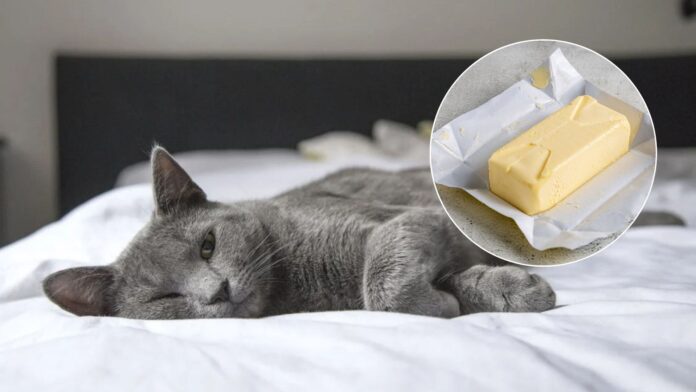
You’re making breakfast when your cat appears beside the kitchen counter, looking particularly interested in the butter waiting to go on your toast. Perhaps they lean forward for a curious sniff. Or perhaps they’ve already managed to steal a taste while you weren’t looking.
Now you’re wondering whether you’ve got something to worry about.
Plain butter isn’t toxic to cats, and a small lick or two is unlikely to cause problems for most healthy cats. That’s reassuring if your cat has just helped themselves to a little.
But it doesn’t mean butter is a good treat. It’s high in fat, adds unnecessary calories, and can upset a cat’s stomach, especially in larger amounts.
So what makes butter unsuitable, and what should you do if your cat has already eaten some?
Why Are Some Cats Interested in Butter?
Cats can be surprisingly curious about the food we eat. One might ignore everything on the breakfast table, while another investigates the cheese, sniffs your toast, and seems determined to inspect the butter dish.
The smell or texture of butter may attract some cats. Others may simply be curious about something you’re handling. We can’t assume every cat is interested in it for the same reason.
But finding a food appealing doesn’t mean it’s good for them.
Cats are obligate carnivores, meaning they need certain nutrients that are naturally found in animal tissues. Although butter comes from milk, it doesn’t provide the balanced nutrition cats require.
And its high fat content makes it a particularly poor choice for an everyday snack.
Why Isn’t Butter Good for Cats?
Butter is approximately 80% fat, making it a highly concentrated source of calories.
Cats certainly need fat in their diets. It supplies energy and essential fatty acids and is an important part of properly balanced cat food.
The problem isn’t that fat is inherently bad for cats. It’s that butter adds a large amount of it without providing a useful nutritional benefit.
A cat eating a substantial amount of butter may develop digestive upset, including vomiting or diarrhea. Some cats will tolerate more than others, but there’s no reason to make butter a regular part of their diet.
What About Lactose?
There’s another issue worth considering: butter is a dairy product.
Many Many adult cats have difficulty digesting lactose, the natural sugar found in milk. This happens because they produce relatively little lactase, the enzyme needed to break lactose down.
That’s one reason ordinary cow’s milk can cause digestive problems in some cats.
Butter contains much less lactose than milk, so its high fat content is generally the more relevant concern. Nevertheless, a particularly sensitive cat may still experience digestive discomfort.
Switching to a lactose-free product doesn’t solve the main problem. It would still be a rich, fatty food that your cat doesn’t need.
My Cat Ate Butter. What Should I Do?
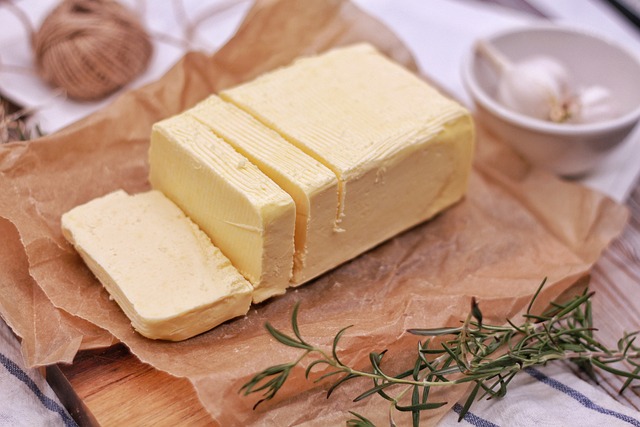
Imagine turning back toward the kitchen counter and noticing a small mark on the butter. Your cat is nearby, looking entirely innocent.
Before worrying, try to work out what they actually ate.
Was it plain butter? Did they take one or two small licks, or is a noticeable amount missing? Does your cat have any existing health problems?
If a healthy cat has had a tiny taste of plain butter and seems completely normal, monitoring them at home is generally reasonable.
Remove the remaining butter, make sure fresh water is available, and keep an eye on your cat for any changes.
If they’ve eaten a larger quantity, contact your veterinarian for advice, even if they seem fine initially. Your vet can consider the amount eaten, your cat’s size, their medical history, and whether any other ingredients were involved.
Signs to Watch For
After eating butter, a cat who develops digestive upset may show:
- Vomiting or diarrhea
- Abdominal discomfort or unusual sensitivity
- Reduced appetite or refusal to eat
- Unusual tiredness or lethargy
- Excessive gas or bloating
A single mild symptom doesn’t necessarily mean something serious is happening, but repeated vomiting, significant discomfort, or a cat who won’t eat deserves veterinary attention.
If your cat seems markedly unwell, contact your vet promptly. The same applies if they have an existing digestive condition or another medical problem that could make the situation more complicated.
Don’t try to make your cat vomit or give home remedies unless your veterinarian specifically instructs you to do so.
For most healthy cats, a tiny accidental taste of plain butter won’t turn into an emergency. The important thing is knowing when the situation is no longer quite so simple.
What About Garlic Butter, Buttered Toast, or Pastries?
This is where checking the ingredients becomes especially important.
A lick of ordinary butter isn’t the same as eating a flavored spread or a piece of food containing several ingredients.
Garlic and onion are toxic to cats, whether they’re fresh, cooked, or used as dried seasonings. They can damage red blood cells and cause a potentially serious form of anemia.
If your cat has eaten butter or another food containing garlic or onion, contact your veterinarian promptly rather than waiting for symptoms to appear.
Butter cookies, pastries, sauces, and other prepared foods also need to be considered individually. Depending on the recipe, the butter may not be the ingredient that matters most.
A small taste of plain buttered toast is generally less concerning than a similar amount of food containing a harmful ingredient, but you should still consider how much your cat ate and whether anything else was added.
If you’re unsure about a product, keep its packaging or ingredient list available when you call your vet.
What Can You Give Your Cat Instead?
If your cat enjoys investigating your food, there are better ways to offer an occasional treat.
A small piece of plain, thoroughly cooked chicken or turkey, without bones, skin, butter, or seasoning, may be suitable for a healthy cat. Commercial treats made specifically for cats are another convenient option.
You can also use a few pieces of your cat’s usual food as a reward.
Whatever you choose, treats should remain a small part of the diet. A useful guideline is to keep them to around 10% or less of your cat’s daily calories, leaving the rest for nutritionally complete and balanced cat food.
If your cat has a medical condition or eats a prescribed veterinary diet, check with your vet before introducing unfamiliar treats.
And if your cat isn’t interested in extra snacks, there’s no need to persuade them. A balanced diet already provides what they need.
The Butter Is Better Left on Your Toast
A cat sneaking a taste of butter can be an amusing little kitchen moment, particularly when the culprit seems convinced nobody noticed.
Fortunately, one or two small licks of plain butter are unlikely to cause trouble for most healthy cats. But butter remains an unnecessarily rich food that can upset digestion, especially when eaten in larger amounts.
Keep it out of reach, check the ingredients if your cat steals a flavored or prepared food, and contact your vet when the amount or your cat’s symptoms give you cause for concern.
Your cat may think the butter dish is worth investigating. That doesn’t mean what’s inside belongs on their menu.
Sources & Further Reading
- Mitchell, S. C. (2024). Can Cats Eat Butter?. PetMD.
- Cornell Feline Health Center. (n.d.). Feeding Your Cat. Cornell University College of Veterinary Medicine.
- ASPCA Animal Poison Control. (n.d.). People Foods to Avoid Feeding Your Pets. ASPCA.
- Merck Veterinary Manual. (2024). Garlic and Onion (Allium spp) Toxicosis in Animals. Merck Veterinary Manual.
- PetMD. (n.d.). What Human Food Can Cats Eat?. PetMD.
- National Research Council. (2006). Your Cat’s Nutritional Needs: A Science-Based Guide for Pet Owners. National Academies Press.

