
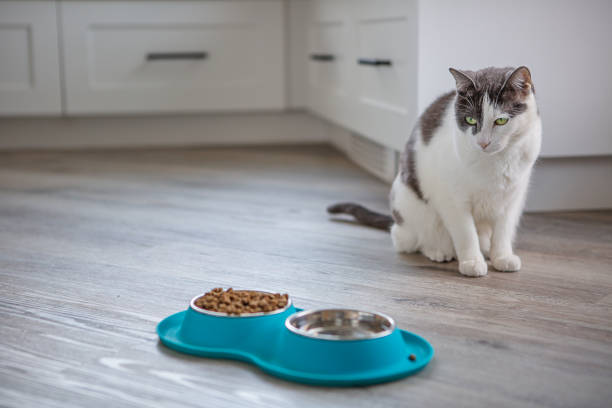
A cat who usually circles your legs at mealtime may suddenly leave a full bowl untouched. It is worrying when that happens, especially if you cannot see an obvious reason.
One missed meal does not tell you what is wrong. But a clear change in appetite is worth paying attention to. How much your cat is eating—and how they seem otherwise—can help you decide what to do next.
When to Call the Vet—and When Not to Wait
If your cat is eating much less than usual, call your vet for advice. Don’t rely on a fixed waiting period.
A cat who refuses all food should be discussed with a vet the same day, and very young kittens need help sooner. If your cat has eaten nothing for 24 hours, they need veterinary care. But if they seem unwell or develop other worrying signs, don’t wait for the 24-hour mark.
- Go to an emergency vet now: difficulty breathing, collapse, unresponsiveness, marked weakness or severe lethargy, severe or persistent vomiting, or severe diarrhea with blood.
- Call your vet today: yellowing of the eyes or gums, or repeated vomiting or diarrhea that does not meet the emergency signs above.
- Call your vet if you notice a clear change in drinking, especially if your cat is also eating less.
Hiding on its own, or vomiting once, does not automatically mean there is an emergency. But if appetite loss comes with worsening symptoms or other changes that concern you, call your vet.
Why Ongoing Appetite Loss Matters
Cats have specific nutritional needs. If they eat very little or nothing for too long, their bodies may start using stored fat for energy.
In some cats, the liver struggles to deal with that sudden flow of fat. This can lead to hepatic lipidosis, also known as fatty liver disease.
Overweight cats are at greater risk, but there is no reliable 24- or 48-hour countdown that tells you when fatty liver disease will develop. One missed meal is not a reason to panic. Ongoing food refusal, however, should not be treated as a harmless fast.
Appetite Loss Is a Clue, Not an Explanation
Many different problems can look the same when all you see is an untouched bowl.
Your vet will want to know when the change started, whether your cat is eating anything at all, and whether anything else has changed. Drinking, vomiting, bowel movements, activity, behavior, food, and routine can all provide useful clues.
A physical examination, including a look inside your cat’s mouth, can help separate problems that may look very similar at home.
Before you call, try to remember when your cat last ate normally and roughly how much they have eaten since. Note anything else that seems different. You do not need to work out the cause yourself; these details simply give your vet a better place to start.
When Eating May Hurt
Think about trying to enjoy your favorite meal with a toothache. Even if you were hungry, eating would not be very appealing.
Cats can have the same problem. Gum inflammation, periodontal disease, or another painful problem in the mouth can make eating uncomfortable. What looks like fussiness may actually be a cat avoiding pain.
Some cats walk up to the bowl and then turn away. Others chew carefully or seem less interested in dry food. But no single behavior proves that the mouth is the problem, and some cats show very little at home even when something hurts.
That is why an examination matters. You are not expected to diagnose dental pain by watching the food bowl.
Sometimes the Food Isn’t the Problem
A cat can lose interest in food for many reasons that have nothing to do with the food itself.
Digestive problems such as gastritis or pancreatitis can reduce appetite. Illnesses elsewhere in the body, including kidney disease, can do the same. Stress, a new environment, or changes in the usual routine may also affect how much a cat eats.
These different problems can all lead to the same visible result: less food disappearing from the bowl. A list of possible causes can help explain what your vet may consider, but it cannot tell you which one is affecting your cat.
Some cats also eat less for a short time after vaccination. That can happen, but it should not be used to explain away ongoing food refusal or appetite loss that comes with other worrying signs. Timing is useful information for your vet; it does not prove the problem is harmless.
What Treatment Might Involve
What happens next depends on why your cat has stopped eating.
Your vet may treat the underlying problem and also help your cat get enough food while they recover. In some cases, medication may be used to encourage appetite. Other cats may need extra nutritional support.
If a cat is seriously ill or cannot eat enough on their own, a feeding tube can sometimes provide the nutrition they need while treatment continues.
These steps are not necessary for every cat with a poor appetite. The right approach depends on the cat, the cause, and how much they are able to eat.
A Note About Home Remedies
It is understandable to want to get your cat eating again as quickly as possible. But trying treatments before you know what is wrong can make things more complicated.
Unless your vet tells you otherwise, don’t give human medicines, supplements, or appetite stimulants, and don’t try to force food into your cat’s mouth.
While you are arranging advice, you can keep offering your cat their usual food and make sure fresh water is easy to reach in a calm place.
Those are supportive steps. They are not a substitute for calling the vet if your cat keeps eating less or develops worrying symptoms.
Making Mealtime More Comfortable
Once medical problems have been considered, a few simple changes may make eating more comfortable.
- Keep food and water bowls away from the litter box.
- Offer food somewhere quiet, and keep the routine as steady as you reasonably can.
- Warm food slightly to make it smell stronger. Check that it is not too hot before offering it.
- Try a shallow, wide bowl if your cat seems to prefer one. Cats have different preferences.
These changes may remove small things that make mealtime less appealing. They cannot fix an illness that is reducing your cat’s appetite.
If your cat keeps eating less than usual, your vet still needs to work out why.
Paying Attention to Changes in Appetite
Cats cannot tell us that they feel nauseated, have a painful tooth, or are starting to feel ill. Sometimes a change in appetite is one of the first signs that something is different.
Knowing what is normal for your cat helps. Pay attention to how much they usually eat, how they behave around meals, and whether anything else in their routine has changed.
Those observations can help you notice a meaningful change sooner and give your vet useful information.
If your cat stops eating, the goal is not simply to get them to finish the bowl. It is to find out why their appetite has changed and make sure they get the care they need.
Sources & Further Reading
- Cornell Feline Health Center. (n.d.). Anorexia. Cornell University College of Veterinary Medicine.
- Taylor, S., Chan, D. L., Villaverde, C., Ryan, L., Peron, F., Quimby, J., O’Brien, C., & Chalhoub, S. (2022). 2022 ISFM Consensus Guidelines on Management of the Inappetent Hospitalised Cat. Journal of Feline Medicine and Surgery, 24(7), 614–640.
- Hunter, T., Barnette, C., & Ward, E. (n.d.). Hepatic Lipidosis in Cats (Fatty Liver Syndrome in Cats). VCA Animal Hospitals.
- Cornell University College of Veterinary Medicine. (n.d.). Emergency and Critical Care. Cornell University College of Veterinary Medicine.
- International Cat Care. (2022). Managing the Cat That Won’t Eat: Information for Owners/Caregivers. International Cat Care.

