
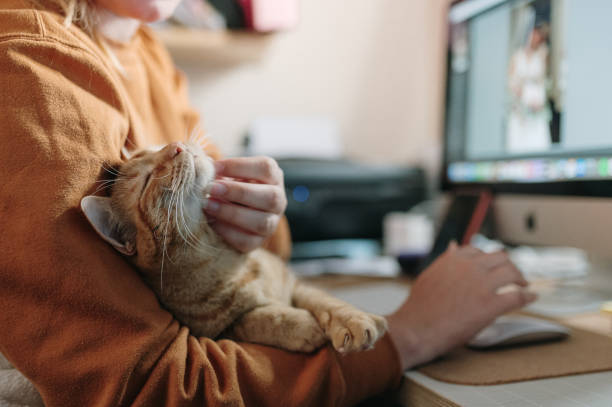
Your cat follows you into the living room and settles at the opposite end of the sofa. You reach over to give them a little affection, and they promptly get up and leave.
It’s tempting to feel rejected. After all, didn’t they come into the room to spend time with you?
Perhaps they did. But wanting company and wanting to be touched aren’t always the same thing, especially when you’re a cat.
Some cats insist on sitting in your lap every evening. Others prefer sleeping nearby, following you from room to room, or appearing for a few minutes before going off on their own. Those differences don’t necessarily say anything about the strength of your relationship.
Research has found evidence that cats can form attachment bonds with their human caregivers. But building a closer bond isn’t about persuading your cat to become more affectionate.
It’s about making time together enjoyable while respecting how your cat prefers to interact.
These six ideas can help.
1. Let Your Cat Choose When to Be Petted
Imagine someone touching your head every time they walked past you. Even if you liked that person, you might occasionally wish they’d stop.
Cats can have strong preferences about physical contact, too. Some actively seek out petting, while others enjoy only a few strokes or prefer companionship without much touching.
When your cat approaches, offer a relaxed hand and let them decide whether to come closer. If they rub their cheek against your fingers or lean into your hand, try a few gentle strokes around the cheeks or near the base of the ears.
Then pause.
Does your cat lean back in or rub against you again? They may be inviting more contact. If they turn away, become tense, flick their tail sharply, or walk off, let the interaction end.
A 2021 study involving 100 cats in a rehoming center explored what happened when people followed simple handling guidelines. The approach emphasized giving cats choice and control, paying attention to their body language, and limiting touch to areas they generally preferred.
After people received the guidance, the cats showed more friendly, affiliative behavior and fewer signs of conflict or aggression during the observed interactions.
That doesn’t mean a particular petting technique guarantees a stronger bond. But it demonstrates something valuable: how we approach a cat can change the experience for them.
Sometimes, the best way to make affection more welcome is to stop insisting on it.
2. Try Communicating With a Slow Blink
You may have noticed your cat looking toward you, gently narrowing their eyes, and briefly closing them before opening them again.
It’s an expression often called a slow blink, and scientists have investigated whether it plays a role in communication between cats and people.
In a 2020 study, cats showed more slow-blinking behavior when their owners slow-blinked at them than when there was no such interaction. In a second experiment, cats were more likely to approach an unfamiliar researcher after a slow-blinking exchange than after the researcher maintained a neutral expression.
The findings suggest that slow blinking may be part of positive communication between cats and humans.
It’s also remarkably easy to try.
When your cat is resting comfortably nearby, soften your expression, slowly narrow your eyes, close them briefly, and open them again. Avoid staring intensely or leaning into their space.
Then simply watch what happens.
Your cat might blink back, look away, or continue resting as though nothing happened. There’s no need to insist on a response.
A slow blink isn’t a magic way to make a cat trust you. It’s a quiet opportunity to interact without demanding physical contact, which may be exactly what your cat prefers at that moment.
3. Make Playtime Something You Share
Picture your cat watching a feather toy disappear behind the sofa. Their ears point forward, their body lowers, and they wait for the perfect moment to spring.
The toy might be attached to a stick, but the game gives your cat opportunities to stalk, chase, pounce, and capture something.
And when you’re moving the toy, you’re part of the experience.
Rather than waving a feather wand directly in your cat’s face, try making it move like prey. Let it scurry across the floor, pause behind a cushion, or disappear around a corner before reappearing.
Watch how your cat responds. Some enjoy energetic chases; others prefer observing patiently before making one carefully timed leap.
Let them catch the toy regularly, and try to end the game with a successful capture. If you use string or wand toys, put them away afterward so your cat can’t become tangled in them or swallow loose pieces.
Does Playing Together Strengthen the Bond?
A 2023 study collected questionnaire responses from 1,591 cat caregivers across 55 countries. Researchers found associations between several aspects of play and the quality of the relationships people reported having with their cats.
Caregivers who described longer shared playtime and a greater variety of games also tended to report better relationships.
Because the study relied on survey responses, it couldn’t establish that more play directly caused those relationships to improve. Still, its findings support the value of exploring play as an enjoyable shared activity.
You don’t need to organize an exhausting play session every day. A few engaging minutes with a cat who wants to participate can be more rewarding than repeatedly trying to entertain one who would rather nap.
The point isn’t to follow a rigid schedule. It’s to discover the games you both enjoy.
4. Create a Home Where Your Cat Feels Secure
Building a relationship isn’t only about what happens when you’re interacting with your cat. It also involves the environment you share.
Cats benefit from having choices about where to rest, explore, play, and retreat. A comfortable hiding place, a stable elevated perch, or a quiet corner can give them somewhere to spend time without being disturbed.
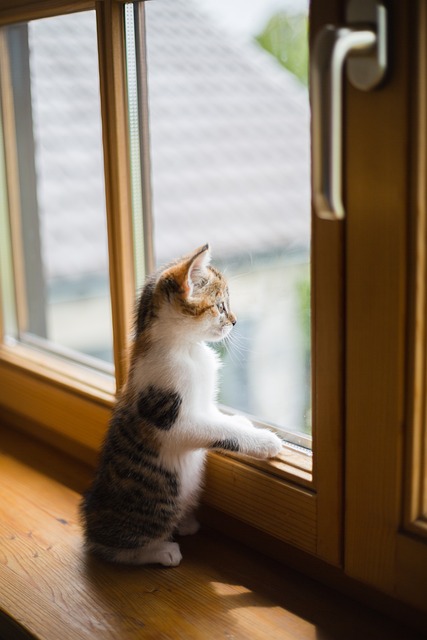
If your cat enjoys looking outside, a secure window perch may offer an interesting view of passing people, moving leaves, and visiting birds. Another cat might prefer a covered bed or a cardboard box in a peaceful room.
Neither option needs to be expensive or elaborate. What matters is that the space is safe, accessible, and genuinely useful to your cat.
This is particularly important when bringing a new cat home. Giving a newcomer somewhere quiet to settle and allowing them to explore gradually can make unfamiliar surroundings less overwhelming.
Don’t Forget Scratching
Scratching is another normal part of feline behavior. Cats use it to maintain their claws, stretch, and leave visual and scent marks.
If your cat repeatedly scratches the sofa, they’re not doing it out of spite. They may simply have found a surface and location that work particularly well.
Try placing a sturdy scratching post or pad near the area they already use. Some cats prefer tall vertical posts that allow a full stretch, while others like horizontal cardboard scratchers.
A 2024 study of household scratching behavior found that environmental factors, including where scratching posts were located, were associated with scratching patterns.
Providing appropriate surfaces is more constructive than punishing a cat for scratching.
And remember that a hiding place should remain somewhere your cat can actually retreat. If they settle in a quiet corner, avoid following them there to insist on attention.
A cat who has somewhere safe to withdraw also has more freedom to choose when to approach you.
5. Enjoy the Small Routines You Share
Not every bonding moment involves a toy, a treat, or a cuddle.
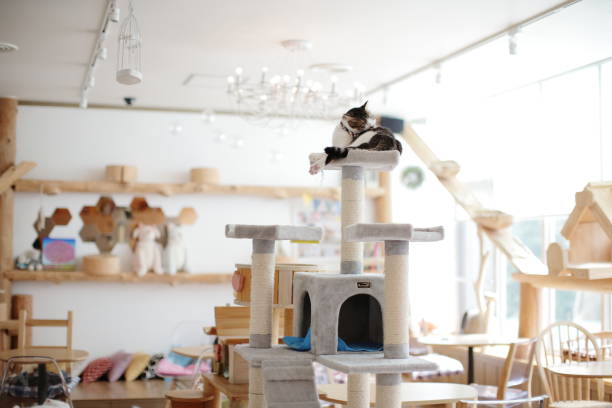
Sometimes it’s your cat joining you while you read. Or appearing at the kitchen doorway when breakfast is being prepared. Or settling near your feet at roughly the same time every evening.
Familiar routines can make daily life more predictable, and they offer plenty of opportunities for comfortable interaction.
You might greet your cat when you return home and let them decide whether to approach. Perhaps they enjoy a short play session before dinner or a quiet moment together before bedtime.
There’s no need to turn every routine into an activity. A cat who regularly chooses to rest near you may enjoy your company without wanting to be stroked.
Another might follow you through the house but rarely sit in your lap. That doesn’t automatically mean they’re less attached to you.
Pay attention to the quieter ways your cat chooses to be nearby, and resist the urge to interrupt every peaceful moment.
Of course, a sudden change in sociability deserves attention. If a normally interactive cat begins hiding, avoids contact, eats less, or behaves unusually, consider whether pain, illness, or another problem could be involved. Contact your veterinarian if the change is concerning or persists.
A closer relationship includes recognizing when your cat needs something other than affection.
6. Discover What Makes Your Cat Curious
Offer three cats the same cardboard box, and you might get three completely different reactions.
One climbs inside immediately. Another investigates it cautiously. The third walks past without a second glance.
Part of getting to know your cat is discovering which experiences genuinely interest them.
You might introduce a puzzle feeder containing some of their regular food, offer a cardboard tunnel, or hide a familiar toy somewhere new. Some cats enjoy exploring paper bags with the handles removed, while others prefer returning to the same favorite toy.
Keep activities safe, and don’t assume every cat wants constant novelty. Familiar objects and predictable routines can be just as valuable.
What About Catnip?
Catnip (Nepeta cataria) contains a compound called nepetalactone, which can trigger behaviors such as sniffing, rubbing, rolling, or playful excitement in cats that respond to it.
But not every cat reacts.
In a 2017 study involving 100 domestic cats, approximately 68% responded to catnip, while 79% responded to silver vine, another plant used for feline scent enrichment.
Some cats who showed little interest in catnip responded to silver vine instead.
These plants can be enjoyable additions to play or exploration when offered in small, cat-appropriate amounts. But neither is essential, and neither should be treated as a shortcut to affection.
If your cat ignores the catnip toy you’ve bought, there’s no reason to keep offering it in the hope of changing their mind.
Try something else, or simply enjoy the activities they already like.
Getting to know your cat’s preferences is part of what makes living with them interesting.

The Best Bond Is the One You Build Together
It’s easy to imagine that a close relationship with a cat should look a particular way: a cat curled up in your lap, following you everywhere, or welcoming every stroke.
But cats don’t all express their relationships in the same way.
Some are openly affectionate. Others are more reserved. Even a very sociable cat may want company one moment and solitude the next.
Building a closer bond means noticing those preferences and making room for them. Offer affection without insisting on it, share games your cat enjoys, and create a home where they feel comfortable exploring, resting, and approaching you by choice.
And appreciate the small moments that happen naturally.
Perhaps your cat won’t sit on your lap tonight. Maybe they’ll settle at the other end of the sofa again.
But if they’ve chosen to spend a quiet evening beside you, that’s a moment worth appreciating.
A closer bond with your cat isn’t about making them affectionate on your terms. It’s about building a shared life in which they feel comfortable being themselves.
Sources & Further Reading
- Haywood, C., Ripari, L., Puzzo, J., Foreman-Worsley, R., & Finka, L. R. (2021). Providing Humans With Practical, Best Practice Handling Guidelines During Human-Cat Interactions Increases Cats’ Affiliative Behaviour and Reduces Aggression and Signs of Conflict. Frontiers in Veterinary Science, 8, 714143.
- Humphrey, T., Proops, L., Forman, J., Spooner, R., & McComb, K. (2020). The Role of Cat Eye Narrowing Movements in Cat–Human Communication. Scientific Reports, 10, 16503.
- Henning, J., Nielsen, T., Fernandez, E., & Hazel, S. (2023). Cats Just Want to Have Fun: Associations Between Play and Welfare in Domestic Cats. Animal Welfare, 32, e9.
- Vitale, K. R., Behnke, A. C., & Udell, M. A. R. (2019). Attachment Bonds Between Domestic Cats and Humans. Current Biology, 29(18), R864–R865.
- Ellis, S. L. H., et al. (2013). AAFP and ISFM Feline Environmental Needs Guidelines. Journal of Feline Medicine and Surgery, 15(3), 219–230.
- Demirbas, Y. S., et al. (2024). Evaluating Undesired Scratching in Domestic Cats: A Multifactorial Approach to Understand Risk Factors. Frontiers in Veterinary Science, 11, 1403068.
- Bol, S., et al. (2017). Responsiveness of Cats (Felidae) to Silver Vine, Tatarian Honeysuckle, Valerian and Catnip. BMC Veterinary Research, 13, 70.
- Delgado, M. M. (2024). Play With Your Cat! The Essential Guide to Interactive Play for a Happier, Healthier Feline. TarcherPerigee.
Featured image by MarioGuti


