
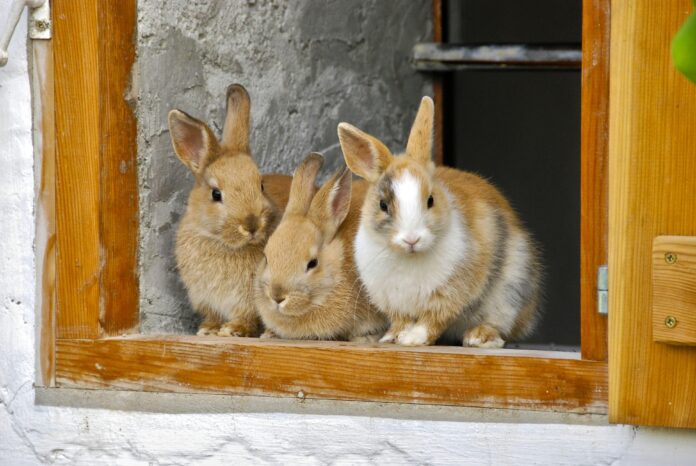
A rabbit might look like the perfect quiet companion: soft fur, long ears, and a little nose that never seems to stop moving. Perhaps you imagine one sitting peacefully nearby, nibbling something green while you enjoy the afternoon.
Then you meet a rabbit who races across the room, leaps into the air for no obvious reason, rearranges a cardboard tunnel, and decides that your phone charger looks suspiciously edible.
There is a lot more to rabbits than their gentle appearance suggests. They are curious, active, social animals with individual personalities and some surprisingly specific needs.
They can make wonderful companions, but they are not the simple, low-maintenance pets they are sometimes assumed to be. They are also a long-term commitment: pet rabbits commonly live for many years, with some reaching 12 years or more.
So what is life with a rabbit actually like, and how can you tell whether one would fit your home?
Rabbits Need More Than a Hutch
The traditional picture of a pet rabbit often includes a small wooden hutch at the bottom of the garden. There is somewhere to sleep, a bowl for food, and perhaps a little room to hop around.
That may look like everything a small animal needs. It isn’t.
Rabbits are built to move. They need enough room to run, stretch out, stand upright, explore, forage, dig, and occasionally launch into one of those bursts of activity that makes a supposedly quiet pet look anything but quiet.
The Rabbit Welfare Association & Fund recommends a single continuously accessible area of at least 3 metres by 2 metres, with a height of 1 metre, for two average-sized rabbits. The RSPCA uses the same minimum dimensions for two medium-sized rabbits.
That space can include the main shelter, but the important point is the usable footprint. A tiny hutch with access to a larger run for only part of the day is not the same thing as having adequate room available all the time.
Larger rabbits may need more, and more space is always welcome.
Suitable accommodation can be created indoors or outdoors. What matters is that the rabbits have enough secure space to move and behave normally rather than spending most of their lives confined to a small cage.
Making Your Home Rabbit-Friendly
Indoor rabbits can become very much part of household life. They learn the sounds of routines, investigate what people are doing, and often develop favorite places to rest.
Unfortunately, homes designed for humans also contain plenty of things a rabbit may want to chew.
Electrical cables are an obvious danger. Houseplants can be toxic, while carpets, furniture, cleaning products, and small objects that could be swallowed all deserve a second look.
Rabbit-proofing means removing hazards or putting them out of reach while giving the rabbits safer things to investigate. Non-slip flooring, hiding places, cardboard tunnels, safe chew materials, and opportunities to dig can make the environment both safer and more interesting.
Outdoor rabbits need the same ability to move, along with protection from predators, escape, rain, wind, direct sun, and extreme temperatures.
Whether rabbits live inside or outside, a small cage should not be where they spend most of their lives.
One Rabbit or Two?
If you are picturing one rabbit coming home with you, companionship is worth thinking about before you start buying supplies.
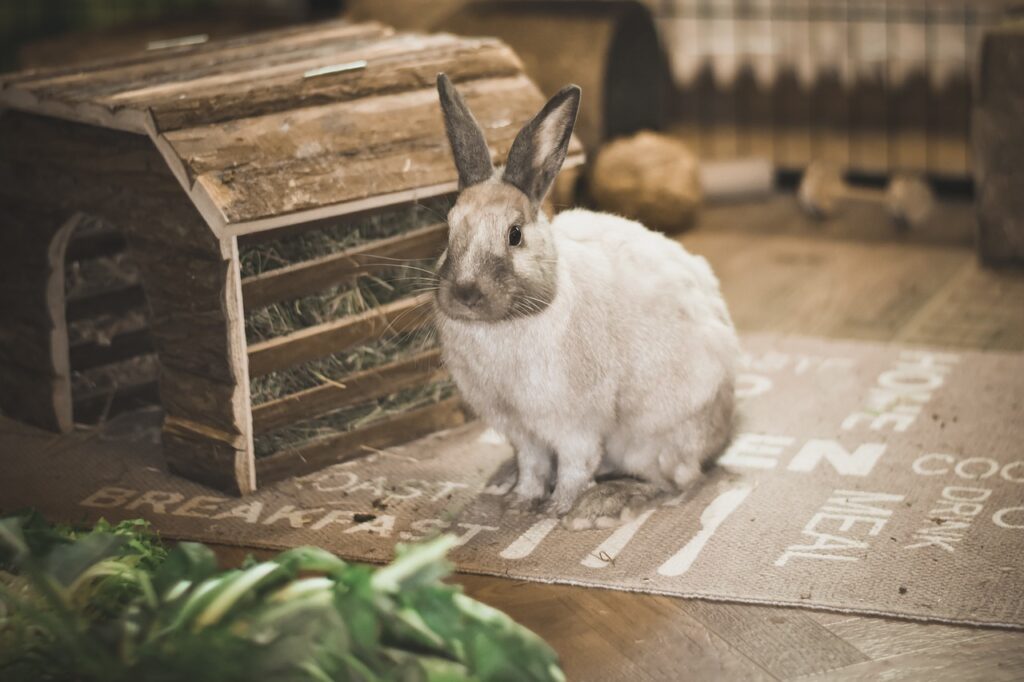
Rabbits are highly social animals. Compatible rabbits may rest together, groom one another, explore side by side, and seek each other out throughout the day.
People can become important companions too, and many rabbits form strong relationships with their caregivers. But rabbit-welfare organizations generally recommend keeping rabbits with at least one compatible rabbit unless a vet or qualified behaviorist advises otherwise for that particular animal.
A neutered male and neutered female is often one of the easier pairings, although personality and compatibility still matter. Other combinations can work too.
What does not work well is simply putting two unfamiliar rabbits together and expecting them to become friends. Rabbits can be territorial, and poor introductions can lead to stress or injury.
Bonding needs to be managed gradually, giving each rabbit space to move away and watching carefully for signs that the relationship is—or is not—developing well.
For someone new to rabbits, adopting an already bonded pair from a reputable rescue can remove much of that uncertainty. The rescue may also be able to tell you how the rabbits interact and what each one is like.
Some individual rabbits need different arrangements because of health or persistent incompatibility. Those cases deserve individual advice rather than forcing companionship that clearly is not working.
Rabbits Have Personalities Worth Getting to Know
Spend time around rabbits and the idea that they are all quiet, timid creatures disappears quickly.
One may be a fearless explorer who inspects anything new within seconds. Another may stay at a safe distance for a while before deciding whether an object—or a person—is worth approaching.
They communicate in subtler ways than many dogs do, but those signals become more familiar when you know the individual rabbit.
A sudden leap with a twist in the air is commonly called a binky and is usually associated with an excited, positive moment. A strong thump of the hind feet may signal alarm, although context matters. A nose bump might be investigation, attention-seeking, or simply a rabbit making its way past you.
There is no need to memorize a dictionary in which every movement has one fixed translation. Watching what happens before and after a behavior, and learning what is normal for that rabbit, tells you much more.
What If Your Rabbit Doesn’t Like Being Picked Up?
This can surprise people who imagined a rabbit as a cuddly pet.
Many rabbits do not enjoy being lifted off the ground. They may be perfectly comfortable sitting beside a person or asking for gentle strokes while strongly objecting to being picked up.
A struggling rabbit can also hurt themselves if their body is not properly supported.
Affection therefore does not have to mean carrying a rabbit around. Some will approach for attention, follow familiar people, relax beside them, or investigate whatever they are doing.
Often, one of the nicest ways to spend time with a rabbit is simply to sit on the floor and let the rabbit decide whether to come closer.
If children are involved, adults should supervise and teach them to respect the rabbit’s space rather than repeatedly picking the animal up for cuddles.
A rabbit that chooses to approach is having a very different experience from one that cannot get away.
A Rabbit’s Day Revolves Around More Than Meals
Rabbits are often particularly active around dawn and dusk, although individuals develop their own routines.
You might see a burst of running and exploring in the morning, followed by resting, grooming, and a great deal of hay eating. Later in the day, activity may pick up again.
That rhythm is useful to imagine when deciding whether rabbits fit your household. They need care every day, not just a topped-up bowl and an occasional cage clean.
An ordinary day includes checking food and water, cleaning soiled areas, and noticing whether the rabbits are eating, moving, and behaving as usual. It also means providing things to do.
Cardboard tunnels, safe objects to chew, hiding places, scattered forage, and suitable digging opportunities can all make the environment more interesting. Some rabbits also enjoy learning simple behaviors through positive reinforcement.
And there will probably be moments when something you carefully arranged in one corner is dragged somewhere else because your rabbit has different ideas about interior design.
That is part of living with them.
Why Hay Is More Important Than Carrots
If cartoons were reliable nutrition guides, rabbits would spend their lives eating enormous carrots.
Real rabbits need something less colorful at the center of the menu.
Hay or grass should make up the main part of an adult rabbit’s diet. Its fibre is important for normal digestive function, while all that chewing also helps wear teeth that continue growing throughout a rabbit’s life.
Good-quality grass hay should be readily available, along with fresh water. Suitable leafy greens and an appropriate amount of rabbit pellets can make up other parts of the diet.
Age, health, reproductive status, and individual needs can affect exactly what is appropriate. Young rabbits and some pregnant or nursing rabbits, for example, may need different nutritional advice from healthy adults.
Carrots and many commercial treats are better thought of as occasional extras than staple foods because of their sugar content.
A pile of hay may look less impressive than a bowl full of colorful treats. For a rabbit, it is doing far more important work.
The Strange Little Detail About Rabbit Digestion
Rabbit digestion also comes with something that can surprise new owners.
Rabbits produce special soft droppings called cecotropes, which they normally eat as they are produced. This allows them to obtain nutrients generated during fermentation in the digestive tract.
To us, that may sound rather strange. For the rabbit, it is completely normal biology.
Most owners rarely notice it happening. But it is another useful reminder that a rabbit’s digestive system works very differently from ours—and that getting the diet right matters.
Why Small Changes in a Rabbit’s Routine Matter
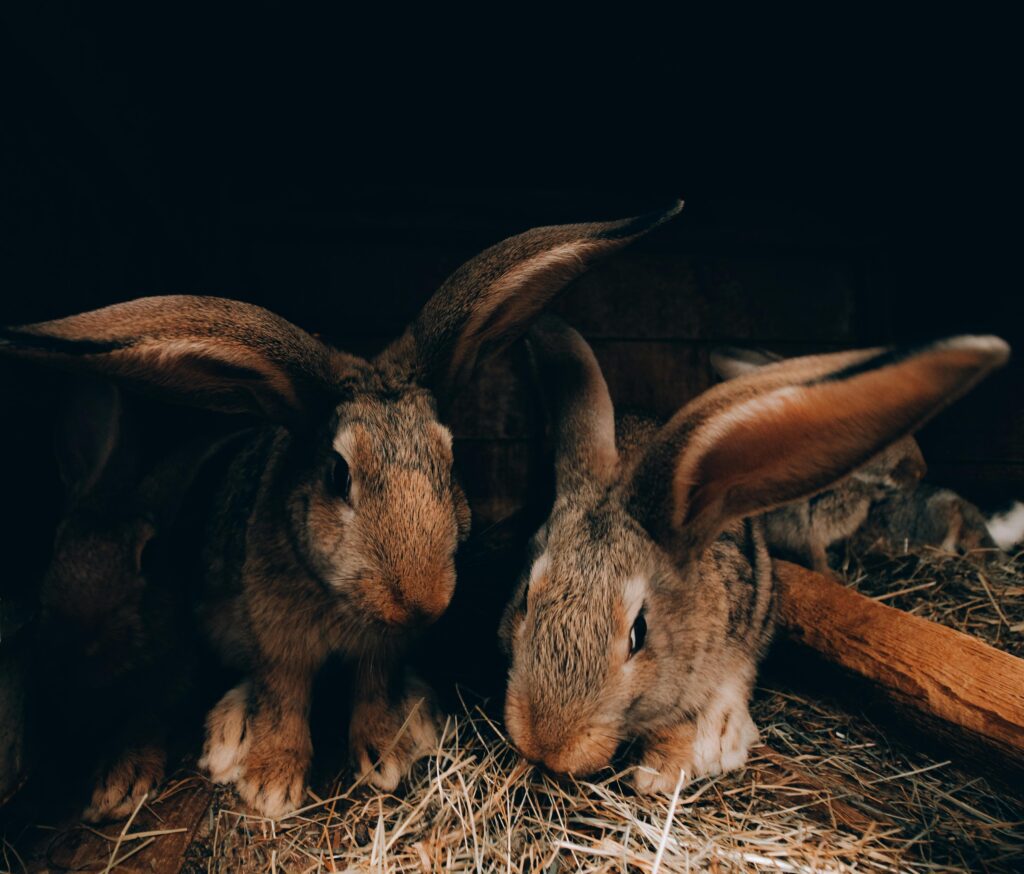
Rabbits do not always make illness obvious. A rabbit that is uncomfortable may simply become quieter, hide more, lose interest in food, or behave a little differently from usual.
That is why knowing your rabbits’ normal routine matters.
If you see them every day, you learn who arrives first when food appears, how much time they normally spend resting, what their droppings usually look like, and which behaviors are ordinary for them.
One change deserves particular attention: if a rabbit stops eating or begins producing noticeably fewer droppings, contact a rabbit-experienced vet promptly rather than waiting to see whether it passes.
Loss of appetite and reduced droppings can accompany serious digestive problems, including gastrointestinal stasis. Merck Veterinary Manual specifically advises prompt veterinary care when a rabbit stops eating or develops signs of digestive upset.
Rabbits also need attention to their teeth, nails, skin, coat, and general health. Finding a vet who regularly treats rabbits before you need one is much easier than discovering during an emergency that the nearest clinic does not.
Vaccinations and Neutering Matter Too
Preventive healthcare depends partly on where you live.
Serious rabbit diseases include rabbit haemorrhagic disease and myxomatosis, but available vaccines and recommendations are not identical around the world. For example, vaccination options in Australia differ from those available in the UK.
That makes your local rabbit-experienced vet the right person to tell you which vaccines are available and appropriate where you live. Being an indoor rabbit does not necessarily remove every route of exposure.
Spaying and neutering deserve planning too. For female rabbits, spaying can reduce the risk of reproductive disease, including uterine cancer. Neutering also prevents accidental litters and can make some compatible pairings easier to manage.
Timing and suitability depend on the individual rabbit, so discuss the decision with a vet familiar with rabbit medicine rather than treating one age or procedure as right for every animal.
These are much easier decisions to make before a problem arises.

Summer, Winter, and All That Fur
A rabbit’s coat may look wonderfully insulating, but hot weather can be dangerous.
Rabbits are vulnerable to overheating, particularly when heat is combined with humidity, direct sun, or poor ventilation. UC Davis veterinary guidance warns that rabbits can be susceptible to heatstroke above about 80°F (27°C), but that should not be interpreted as a magic line below which every situation is safe.
Indoor and outdoor rabbits need access to a cool, shaded, well-ventilated area. Enclosed sheds, rooms in direct sunlight, and poorly ventilated spaces can heat up quickly.
Outdoor rabbits also need protection from cold, damp weather and predators, with dry and sheltered places available throughout the year.
Then there is shedding. Some rabbits seem capable of producing an extraordinary amount of loose fur during a seasonal molt.
Gentle brushing can help remove it, and long-haired rabbits may need much more frequent grooming. Rabbits normally swallow some fur while cleaning themselves, and it usually passes through the digestive tract.
Brushing is useful coat care, but it is not a substitute for a good diet or a vet when eating or droppings change.
Can You Make Room for a Rabbit in Your Life?
Space, food, companionship, and health care are only part of the decision. The other part is your ordinary life.
Imagine an average week rather than the version in which everything goes according to plan.
Who will feed the rabbits and clean their space when work runs late? Who notices if one rabbit suddenly stops eating? What happens when you go away for a weekend, take a holiday, or have to leave unexpectedly?
Rabbit care continues when your schedule becomes inconvenient.
The costs do too. Suitable housing, secure enclosures, carriers, bowls, litter trays, and other durable equipment may be initial purchases, while hay, fresh food, litter or bedding, veterinary care, vaccinations where appropriate, and replacement items continue over time.
Illness or injury can also produce bills that are difficult to predict. Pet insurance is worth investigating where it is available, but policies vary, so check what a particular plan actually covers before relying on it.
And remember the timeline. A rabbit may share your life for around a decade and sometimes longer.
This is not a pet to choose because you want something small, inexpensive, and undemanding. Their physical size tells you very little about the commitment involved.
Before You Bring Your Rabbits Home
If everything you have read still makes rabbit companionship sound appealing, a rescue or shelter can be a good place to start.
You may find an established bonded pair already living happily together, or a rabbit that the organization can help match with a suitable companion.
Ask about the animals rather than choosing by appearance alone. Are they confident or cautious? Are they already bonded? Have they been neutered or vaccinated? What is known about their health, diet, habits, and interactions with people?
Different rescues provide different levels of veterinary care and follow-up, so ask what has actually been done rather than assuming every organization operates in the same way.
Before adoption day, have the living space ready, the essential supplies in place, and a rabbit-experienced vet identified.
That way, the rabbits arrive in a home prepared for them rather than one that still has to work everything out.
A Small Pet With a Big Place in Your Life
Rabbits often surprise people who thought they knew what owning one would be like.
They can be playful, observant, independent, affectionate, cautious, mischievous, and intensely curious about changes in their surroundings. They may greet you when you enter a room, investigate something you moved, or simply settle nearby while you get on with your day.
The relationship works best when we appreciate rabbits for the animals they actually are.
That means giving them room to run, appropriate rabbit companionship, food suited to their unusual digestive system, and the freedom to interact without constantly being picked up. It also means accepting the less charming parts of pet ownership: cleaning, budgeting, vet visits, finding care when you travel, and protecting your home from inquisitive teeth.
A rabbit can be a wonderful companion. The important question is whether you’re ready to give them the kind of life a rabbit needs.
If the answer is yes, the reward is getting to know a much more interesting animal than the familiar picture of a fluffy bunny sitting alone in a little hutch.
Sources & Further Reading
- Rabbit Welfare Association & Fund. (n.d.). Space Recommendations. Rabbit Welfare Association & Fund.
- Rabbit Welfare Association & Fund. (n.d.). Indoor Rabbit Housing. Rabbit Welfare Association & Fund.
- RSPCA. (n.d.). Pet Rabbits: Care, Behaviour and Welfare. RSPCA.
- RSPCA. (n.d.). Company for Pet Rabbits. RSPCA.
- RSPCA. (n.d.). Bonding Rabbits. RSPCA.
- VCA Animal Hospitals. (n.d.). Rabbits as Pets. VCA Animal Hospitals.
- Merck Veterinary Manual. (2026). Digestive Disorders of Rabbits. Merck Veterinary Manual.
- VCA Animal Hospitals. (n.d.). Spaying in Rabbits. VCA Animal Hospitals.
- University of California, Davis. (n.d.). Avian, Small Mammal, and Exotics Feeding Guide. UC Davis School of Veterinary Medicine.
- Animal Welfare Victoria. (n.d.). Guidelines for Keeping Pet Rabbits. Agriculture Victoria.
- Moore, L. C. (2022). A House Rabbit Primer: Understanding and Caring for Your Companion Rabbit (2nd ed.). Santa Monica Press.
- Buseth, M. E., & Saunders, R. A. (2015). Rabbit Behaviour, Health and Care. CABI.
Featured image by Onkel Ramirez

