

You see someone playing fetch with their dog at the park. The dog races after the ball, comes bounding back, and waits eagerly for another throw. It is one of those moments that makes having a dog look wonderfully simple.
And that companionship is real. But the scene only shows a small part of what living with a dog actually involves.
There are ordinary mornings when you have somewhere to be, days when going outside is less appealing, and expenses that never seem to arrive at a convenient time. There is also another living being whose needs will not always fit neatly around your plans.
None of that makes dog ownership less rewarding. It simply raises a useful question before you adopt: what will life together look like when bringing a dog home stops feeling new and becomes an everyday routine?
The Adoption Fee Is Only the Beginning
The adoption fee is often the first cost people think about. But getting a dog home and caring for one over the years are two very different financial commitments.
Food, routine veterinary care, preventive care suited to the individual dog, and basic supplies are part of the ongoing picture. Depending on the dog and your circumstances, grooming, training, medication, licensing, or help with care while you are away may matter too.
Then there are the costs you cannot schedule. An injury, sudden illness, or another unexpected need can bring expenses outside an ordinary monthly budget. You cannot predict every surprise, but you can think ahead about how you would handle one.
The amount you spend will also depend on the dog. A larger dog may eat more than a smaller one, while some dogs need regular grooming or ongoing medication and others do not. Veterinary costs and other services vary by location as well.
Rather than relying on a generic estimate of what dogs cost, find out what is known about the particular dog you are considering. Ask about health and care needs, look at prices where you live, and think about how you would manage an unplanned bill.
The question is not whether you can predict every expense. You cannot. It is whether caring for a dog is financially sustainable for your household.


What Does Your Average Tuesday Look Like?
It is easy to picture a free afternoon with a dog: a long walk, some time at the park, perhaps an evening relaxing together at home.
But most of life is not made up of free afternoons.
Think instead about an ordinary weekday. When do you leave home? How much time do you have before work? What happens when your day runs longer than expected?
A dog’s routine involves more than fitting in a walk. Dogs need regular interaction, activity suited to their health and temperament, and opportunities for play, learning, and rest. What that looks like varies considerably from one dog to another.
Consider an older adult who enjoys gentle afternoon strolls and is thinking about adopting a young, energetic dog. Both may enjoy being outdoors, but that does not necessarily make their routines compatible. The dog may need more activity than the person can comfortably provide, leaving both frustrated over time.
That does not make the person a poor owner or the dog a difficult one. It may simply be the wrong match.
If you spend long stretches away from home, think about how the particular dog would cope with that schedule and who could provide care or a break when necessary. What matters is not how much time you imagine spending together, but what you can realistically provide on an ordinary day.
What Do You Actually Know About the Dog?
Adoption profiles can tell you a great deal, but they rarely tell you everything.
Ask the shelter or rescue what is known about the dog’s medical history. Are there veterinary records? Is the dog taking medication? Are there known chronic conditions, previous injuries, dietary needs, or ongoing treatments? If information is missing, that matters too. “We don’t know” can be more useful than an assumption presented as certainty.
Behavior deserves the same kind of attention. Ask what staff, foster carers, or previous owners have actually observed. How does the dog respond to handling? What happens when it is left alone? Has it lived with children, dogs, cats, or other animals? Is it known to guard food or objects? Is it house-trained, and how does it cope with unfamiliar people or environments?
The distinction between what has been observed and what has been inferred is important. A shelter is an unusual environment, and a dog’s behavior there may not predict perfectly how it will behave once settled into a home. A single behavioral assessment is useful information, not a guarantee of future behavior.
That works both ways. A frightened or reactive dog in a shelter may behave differently in a quieter home, while a dog that appears relaxed during a brief meeting may reveal different needs once everyday life begins.
Try to build the fullest picture available rather than looking for one reassuring label such as “friendly,” “good with dogs,” or “easy.”
When Children or Other Animals Share the Home
“Can we get a dog? Please?” is a familiar request. But however enthusiastic a child may be, the decision—and the responsibility—belongs to the adults in the household.
Dogs can become close companions for children, but safe and respectful interactions require active adult supervision. An adult should be close enough to watch both child and dog and step in if either seems uncomfortable. Children should not be left alone with a dog, and adults remain responsible for feeding, exercise, veterinary care, and the dog’s general wellbeing.
A relationship does not have to develop immediately. A child may feel uncertain around a newly adopted dog, while the dog may need time to become comfortable with unfamiliar people and surroundings. Let the dog move away when it wants space, and avoid encouraging children to approach when the dog is eating, sleeping, retreating, or showing signs of unease.
The same principle applies when another animal already lives in the home: compatibility should not be assumed simply because both animals are usually sociable.
Ask what is known about the prospective dog’s experience with other animals and think just as carefully about the pet you already have. An older dog that values a quiet routine may find an exuberant puppy difficult. A cat that has never lived with dogs may need more time and separation than one with a history of relaxed canine housemates.
Where possible, follow the shelter or rescue’s guidance on introductions. Dogs may benefit from meeting away from the home initially, while dogs and cats generally need a slower process with separate spaces and the ability to retreat. Food, beds, toys, and other resources may also need to be managed separately while everyone adjusts.
The goal does not have to be instant friendship. Peaceful coexistence can be a perfectly good outcome.
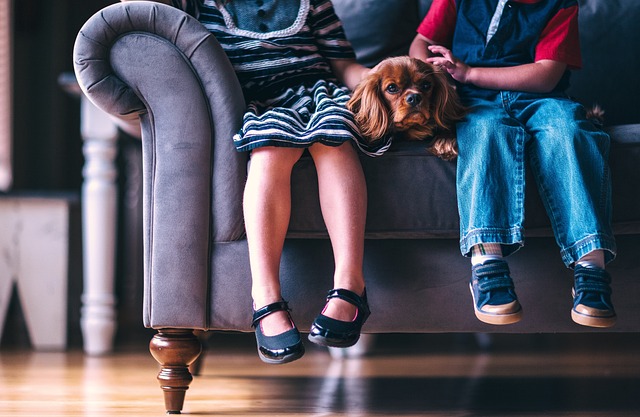
Puppy or Adult? They Ask Different Things of You
A puppy can be difficult to resist. You get to watch it grow, shape early routines, and experience many firsts together.
You also get the work that comes with being very young.
Puppies generally need more frequent supervision, house-training, socialization, and training, as well as a routine that can accommodate their developmental needs. Everyday life may involve interrupted schedules, puppy chewing and teething, accidents, and a great deal of repetition while the puppy learns what humans expect.
An adult dog comes with a different set of unknowns. Some are already house-trained, know basic cues, and have a more established temperament, which can make it easier to judge whether their energy and habits fit your lifestyle. Others may need substantial support adjusting to a new home or learning routines they have never encountered before.
So the choice is not simply “puppies are difficult, adults are easy.” They place different demands on an adopter.
If what attracts you to a puppy is the idea of starting with a blank slate, it is worth remembering that puppies are not blank slates either. Genetics, early experiences, health, socialization, and individual temperament all contribute to the dog they become.
An adult dog may give you more information about who is already standing in front of you.
Choose the Dog, Not Just the Idea of Having One
Sometimes a dog catches your attention immediately. Perhaps you love its appearance, it reminds you of a dog you once knew, or it belongs to a breed you have always admired.
There is nothing wrong with that first attraction. The problem begins when it matters more than the animal’s actual needs.
Dogs differ in personality, activity level, health, habits, and preferences. One may thrive on long outings and frequent activity; another may be much happier with shorter walks and a quieter routine. Breed and appearance can offer some information, but neither tells you exactly what life with an individual dog will be like.
Suppose you love the idea of having a companion for long hikes. That may be an excellent match if hiking is genuinely part of your routine. But if most evenings you prefer a short walk followed by a quiet night at home, the lifestyle you imagine and the one you actually live may be quite different.
The same applies to your living space, working hours, energy, and willingness to change your routine. Adopting a dog will involve adjustments, but there is a difference between making reasonable changes and committing to a daily lifestyle you are unlikely to sustain.
Before deciding, learn as much as you can about the individual dog. What is known about its health, behavior, energy, and habits? How does it cope with time alone? What kind of activity and attention does it seem to need?
You may never have a complete picture before adoption. But the information you do have can help you make a better match.
The best choice is not necessarily the dog that appeals to you most at first sight. It is one whose needs and your circumstances can work well together.
Check the Rules Where You Live
There is one decidedly unromantic part of adoption that is worth checking before you become attached to a particular dog: whether you are actually allowed to keep it where you live.
Rules vary enormously between countries, cities, rental agreements, apartment buildings, and other housing arrangements. Depending on where you live, there may be restrictions involving pets, size or number of animals, as well as registration, licensing, identification, or other local requirements.
If you rent or live somewhere with shared rules, check them before adopting rather than assuming a dog will be permitted. It is much easier to resolve an administrative question before adoption than after the dog has already come home.
Can You Try the Routine Before You Commit?
There is only so much you can learn about living with a dog by imagining it.
You may know that dogs need walks, feeding, attention, and veterinary care. Knowing those things in theory is different from arranging your own day around them.
If you are uncertain, fostering or dog-sitting can sometimes offer a lower-commitment way to experience part of that routine. Even a limited period of caring for a dog may make practical questions more concrete: how easily do walks fit into your schedule, what happens when you need to leave home, and which parts of the routine require more planning than you expected?
It is not a perfect rehearsal. Every dog is different, and a temporary arrangement cannot predict what life with another dog will be like. But practical experience can reveal things that are difficult to see from the outside.
You may discover that the routine suits you better than expected—or that some parts of it need a plan before adoption. Either way, that is useful information.
Think Beyond the First Few Weeks
Bringing a dog home can be exciting. There are new routines to establish, habits to learn, and the gradual process of getting to know one another.
But adoption is not only about those first weeks.
A dog may depend on you for many years, through changes in work, relationships, living arrangements, health, and other parts of ordinary life. No one can predict exactly how long a particular dog will live or everything that will happen along the way. What you can consider is whether you are prepared to keep meeting that dog’s needs as your own circumstances change.
That does not mean having every part of the future worked out. It means recognizing that food, shelter, care, companionship, and security will still matter long after the novelty of adoption has passed.
For a deeper look at a dog’s perspective, Inside of a Dog by Alexandra Horowitz is an engaging way to think about how dogs perceive and experience the world around them.
And perhaps that perspective points toward the most useful question of all.
It is natural to begin by imagining what a dog could bring into your life: companionship, affection, shared routines, and the pleasure of having another living being around.
But there is another side to the decision: what kind of life can you offer the dog?
Thinking carefully about that does not make adoption any less rewarding. It gives you a better chance of choosing a companion whose needs you can meet—and of building a life together that works for both of you.
Sources & Further Reading
- Dogs Trust. (n.d.). Getting a dog when you have children. Dogs Trust.
- Centers for Disease Control and Prevention. (2026). Dogs. Healthy Pets, Healthy People.
- American Veterinary Medical Association. (n.d.). Selecting a pet dog. American Veterinary Medical Association.
- Dogs Trust. (n.d.). Dogs and children: living happily together. Dogs Trust.
- ASPCA. (n.d.). Position Statement on Shelter Dog Behavior Assessments. ASPCA.
- Dogs Trust. (n.d.). Introducing a New Puppy or Dog to Your Dog. Dogs Trust.
- Dogs Trust. (n.d.). Helping Dogs and Cats Live Happily Together. Dogs Trust.
- McConnell, P. B., & London, K. B. (2011). Love Has No Age Limit: Welcoming an Adopted Dog into Your Home. McConnell Publishing, Ltd.
Featured image by Cedric Clth

