
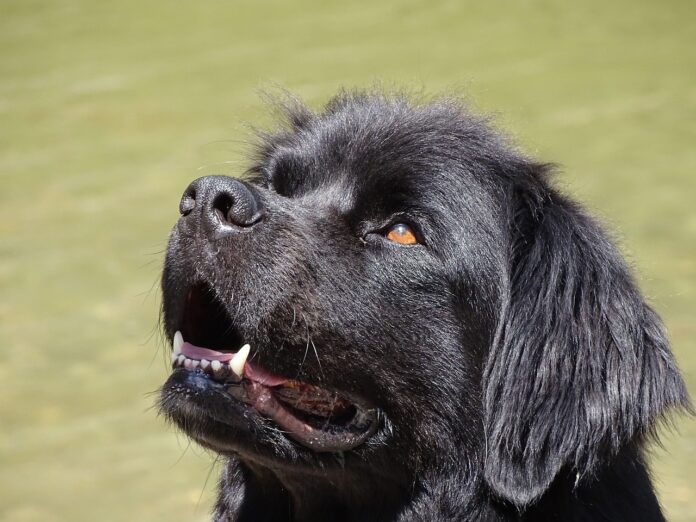
Imagine a dog so large that turning around in your kitchen becomes a minor event. They’ve just finished drinking, leaving a trail of water across the floor, and now they’re settling beside your feet in a magnificent heap of fur.
Welcome to life with a Newfoundland.
These enormous dogs are famous for their gentle nature, impressive strength, and history of working in the water. Their affectionate expressions and fluffy coats make them easy to admire.
But there’s a difference between loving the idea of a Newfoundland and sharing your home with one.
A dog weighing as much as an adult person changes everyday routines. Grooming takes time, training matters, and even getting into the car can require some planning.
So what is this remarkable breed really like, and could a Newfoundland fit into your life?
From Fishing Boats to Family Homes
Long before Newfoundlands became family companions, they worked alongside fishermen on the Canadian island that gave the breed its name.
These powerful dogs helped haul fishing nets and pull carts carrying the day’s catch. Their strength, substantial build, and ability to work in cold, wet conditions made them valuable working animals.
The breed’s precise ancestry remains uncertain, although recognizable Newfoundland-type dogs were established on the island by the early eighteenth century.
Over time, Newfoundlands became particularly famous for their abilities in the water.
Why Are Newfoundlands Such Impressive Water Dogs?
A Newfoundland has a broad, muscular body, strong limbs, and webbed feet. Its dense double coat helps provide protection in cold, wet conditions.
These physical characteristics helped the breed perform demanding work in and around the water. Newfoundlands also developed a reputation for rescuing people, and stories of their lifesaving efforts became part of the breed’s history.
That tradition continues through organized water-work activities, including tests that assess trained skills.
But there’s an important distinction between a breed’s history and an individual dog’s abilities.
A Newfoundland doesn’t automatically know how to rescue someone simply because its ancestors worked in the water. Reliable rescue work requires appropriate training, and not every Newfoundland enjoys swimming.
For some, the closest connection to their maritime ancestry may be an enthusiastic splash in a shallow pool.

Just How Big Is a Newfoundland?
You can read a Newfoundland’s measurements and still be surprised when you meet one.
According to the American Kennel Club breed standard, adult males average approximately 28 inches (71 cm) at the shoulder and weigh around 130–150 pounds (59–68 kg). Females average about 26 inches (66 cm) and 100–120 pounds (45–54 kg).
Individual dogs may fall outside those ranges, but there’s no mistaking the breed’s giant proportions.
Their thick coat makes them look even more substantial. Black is probably the color most people imagine, although Newfoundlands also come in brown, gray, and black-and-white. The distinctive black-and-white pattern is often called Landseer, after the artist Sir Edwin Landseer.
Of course, the real question isn’t how impressive a Newfoundland looks standing in a field. It’s what happens when that much dog comes indoors.
What Is Living With a Newfoundland Really Like?
Picture an ordinary evening. You’re sitting on the sofa, and your Newfoundland is stretched out nearby, occupying a considerable amount of floor space.
Someone gets up to make tea, and the dog decides to follow. A moment later, they’re back, settling into the same spot.
For many owners, this quiet companionship is one of the breed’s greatest pleasures.
Newfoundlands are often described as calm, affectionate, and devoted to their families. But even a relaxed giant changes how a household works.
Their bed takes up space, their water bowl can become a small indoor lake, and an enthusiastic greeting from a 140-pound dog is rather different from the same greeting from a small terrier.
Do You Need a Huge House or Garden?
Not necessarily. A Newfoundland needs enough room to move and rest comfortably, but a large garden isn’t a substitute for walks, companionship, and interaction.
Some individuals may do well in smaller homes if their needs are consistently met. The practical details matter more than the size of the property alone.
Can the dog move comfortably between rooms? Is there space for a large bed without blocking walkways? Will stairs become difficult as they age?
Transport deserves thought, too. A Newfoundland may be difficult to lift into a vehicle, particularly if they’re injured or experiencing mobility problems. Suitable vehicle access, ramps, and safe travel arrangements can make everyday life much easier.
These are things worth considering before the adorable puppy becomes an enormous adult.
Are Newfoundlands Really Gentle Giants?
The Newfoundland’s nickname reflects the temperament for which the breed is known.
The breed standard places particular importance on a sweet disposition, and many Newfoundlands are affectionate, patient companions. Some seem perfectly content to observe household life from a comfortable spot, occasionally getting up to investigate whatever everyone else is doing.
Others are playful, enthusiastic, or surprisingly determined when they have an idea of their own.
A breed’s reputation describes characteristics people value, not a guarantee about every individual dog.
A particular Newfoundland may be outgoing, reserved, easily excited, or uncomfortable with certain kinds of handling.
What About Children?
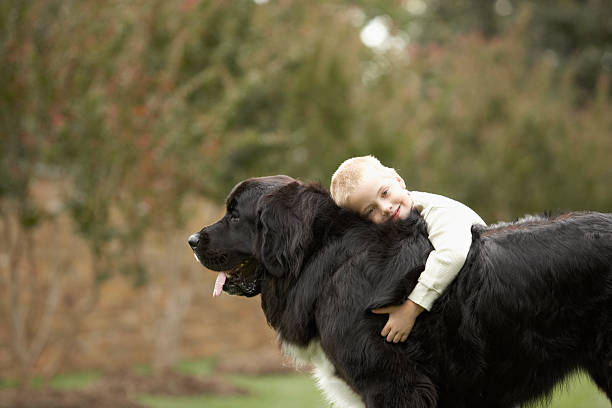
Newfoundlands are sometimes called nanny dogs because of their reputation for patience around children.
It’s a charming nickname, but it shouldn’t be taken literally.
No dog, however gentle, should be expected to supervise children or tolerate unwanted attention indefinitely. A Newfoundland’s sheer size also means an accidental bump can knock over a small child.
Positive relationships depend on adult supervision, respectful interactions, and making sure the dog has somewhere to retreat when they’ve had enough.
A gentle temperament is valuable. Learning to live comfortably together matters just as much.
Training Matters When Your Puppy Will Become a Giant
A Newfoundland puppy can look like an oversized teddy bear, making it tempting to overlook some of their behavior.
Jumping up to greet visitors might seem adorable. Pulling on the leash might look enthusiastic. Refusing to move because something smells interesting can be rather funny.
Now imagine those same behaviors when your dog weighs 140 pounds.
Early training makes an enormous difference.
Start with everyday skills: walking without pulling, waiting at doors, settling when needed, and responding to familiar cues. Reward-based training helps build good habits without relying on force.
Socialization matters, too. Introduce your puppy gradually to different people, places, sounds, and situations, keeping the experiences positive and manageable.
And don’t forget handling. A dog who’s comfortable having their paws touched, ears checked, and coat brushed will be easier to care for throughout life.
The goal isn’t perfect obedience from a tiny puppy. It’s helping a growing dog learn how to move comfortably through a world shared with much smaller people and animals.
That Beautiful Coat Needs Serious Attention
A Newfoundland’s thick double coat is one of the breed’s defining features, and one of its most demanding care requirements.
Beneath the longer outer hairs lies a dense undercoat. Regular brushing helps remove loose fur and prevent tangles and mats, particularly where the coat rubs or gathers moisture.
Many Newfoundlands need thorough brushing several times a week, with extra attention during heavy shedding periods. The right schedule depends on the individual coat and how easily it tangles.
Some owners handle grooming themselves; others include professional grooming in their budget. Either way, it’s an ongoing responsibility rather than an occasional luxury.
After Swimming, Drying Matters
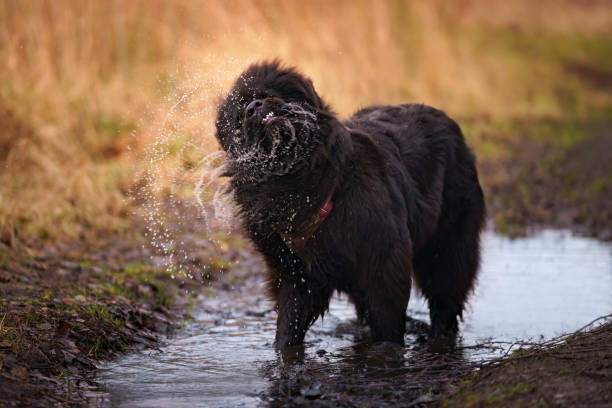
A thick coat can hold moisture close to the skin, especially when it becomes tangled.
If your Newfoundland swims, take time to check and dry the coat thoroughly afterward, including areas that are easy to overlook.
Prolonged dampness and matting can contribute to skin irritation, including painful inflamed patches known as hot spots. The ears also deserve attention after water activities.
It’s an interesting contrast: the coat that helps protect a Newfoundland in cold water needs careful maintenance once the swimming is over.
And Yes, There’s Drool
Some Newfoundlands drool generously, especially around food, drinking, or excitement. Others are less enthusiastic contributors to the household’s saliva collection.
Between loose fur, wet paws, enormous water bowls, and occasional strings of drool, life with a Newfoundland isn’t always tidy.
For people who love the breed, these details may become familiar parts of daily life. For someone who values an immaculate home, they’re worth considering honestly.
How Much Exercise Does a Newfoundland Need?
Despite their working history, Newfoundlands aren’t generally the breed people choose for a high-speed running partner.
Many enjoy a more measured pace. Daily walks, opportunities to explore interesting smells, suitable games, and short training sessions can all contribute to a satisfying routine.
But calm doesn’t mean inactive. Newfoundlands still need regular movement and mental engagement, and individuals vary in their energy levels.
Some love swimming or organized water work. Others prefer walks and gentle games with their families. The aim is to provide activities the individual dog enjoys without assuming every Newfoundland needs the same routine.
Growing Puppies Need Special Care
A Newfoundland puppy has an extraordinary amount of growing to do, and that growth needs to be supported carefully.
Large and giant-breed puppies require appropriate nutrition, particularly when it comes to calorie intake and the balance of minerals such as calcium and phosphorus. Too many calories or an unsuitable diet can contribute to developmental orthopedic problems.
Choose a complete food formulated for the growth of large or giant breeds, and work with your veterinarian to monitor portions and body condition. More food doesn’t necessarily mean healthier growth.
Exercise should also suit your puppy’s development. Allow appropriate play and exploration, but avoid pushing a growing Newfoundland through strenuous forced exercise or repeated high-impact activities.
The objective is healthy, controlled development, not reaching adult size as quickly as possible.
Hot Weather Needs a Plan
The Newfoundland’s coat was useful in cold, wet working conditions. A hot summer afternoon presents a different challenge.
Dogs primarily cool themselves through panting, and thick-coated dogs can be more vulnerable to overheating.
Schedule walks for cooler parts of the day, provide plenty of fresh water and shade, and avoid demanding exercise when conditions are hot or humid.
During extreme heat, your Newfoundland needs access to a genuinely cool indoor environment.
Heavy panting, weakness, confusion, vomiting, or collapse may indicate dangerous heat-related illness.
Heatstroke is a veterinary emergency. Move the dog somewhere cooler, begin cooling with cool water, and seek urgent veterinary care.
A Newfoundland doesn’t have to live somewhere snowy, but their comfort in warm weather should never be an afterthought.
What Health Problems Should Newfoundland Owners Know About?
Like other giant breeds, Newfoundlands have several important health considerations. Not every dog will develop these conditions, but understanding them helps owners and prospective puppy buyers make informed decisions.
Hip and elbow dysplasia are among the conditions associated with the breed. Abnormal joint development can contribute to pain and mobility problems. Maintaining a healthy body condition helps reduce unnecessary strain, although it cannot eliminate inherited risks.
Subaortic stenosis (SAS) is an important heart condition in Newfoundlands. It involves a narrowing beneath the aortic valve that can restrict blood flow out of the heart. Severity varies, which is one reason cardiac screening matters in breeding programs.
Cystinuria is an inherited condition that can cause urinary stones to form. A DNA test is available for the Newfoundland-associated form, and it is included in the breed club’s recommended health screening.
Know the Signs of Bloat
Owners should also understand gastric dilatation-volvulus (GDV), a life-threatening emergency that can affect large, deep-chested dogs.
In GDV, the stomach becomes distended and twists, disrupting normal blood flow and requiring immediate veterinary treatment.
Warning signs can include repeated attempts to vomit without producing anything, restlessness, abdominal swelling, and obvious distress.
If you suspect GDV, seek emergency veterinary care immediately. Don’t wait to see whether the symptoms settle.
Your veterinarian can also discuss your dog’s individual risk and whether preventive measures, such as a gastropexy procedure, are appropriate.
What Health Tests Should a Breeder Provide?
The Newfoundland Club of America recommends several health screenings for breeding dogs, including:
- Hip and elbow evaluations
- Cardiac screening by a board-certified cardiologist
- DNA testing for cystinuria
Ask to see documented results for both parents rather than relying on verbal reassurance.
Some breeders participate in the Orthopedic Foundation for Animals’ CHIC program. A CHIC number indicates that the required tests were completed and the results made publicly available. It doesn’t mean every result was normal, so it’s important to review the actual findings.
Health screening can’t guarantee a perfectly healthy puppy. It does, however, provide valuable information about known risks.
How Long Do Newfoundlands Live?
The American Kennel Club lists a typical Newfoundland life expectancy of approximately 9–10 years, although individual dogs may live longer or shorter lives.
It’s an important consideration when thinking about the long-term commitment involved in caring for a giant breed.
Food, grooming, appropriately sized equipment, and routine veterinary care all create recurring expenses. Medications, some procedures, transport, and professional grooming may also cost more for a particularly large dog.
And it’s worth thinking about the later years, not just the puppy stage.
An older Newfoundland with mobility difficulties may need help getting into a vehicle, navigating steps, or moving comfortably around the home.
Planning for those possibilities is part of responsible ownership, even if they seem distant when you’re admiring a fluffy puppy.
Should You Get a Newfoundland Puppy or Adopt an Adult?
Both options can be rewarding, but they involve different considerations.
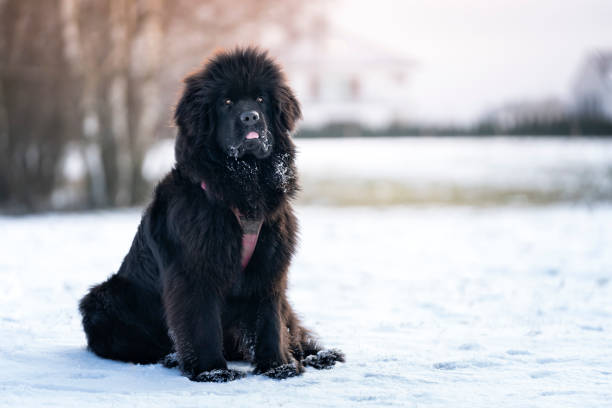
A puppy gives you the opportunity to guide training and social experiences from an early age. It also means managing rapid growth, teaching essential habits, and preparing for a much larger adult dog.
If you choose a breeder, look for openness about health testing, temperament, and the conditions in which puppies are raised. A responsible breeder should also want to know whether you can provide a suitable home.
Adopting an adult Newfoundland may offer a clearer picture of the dog’s size, personality, energy level, and existing habits. A rescue organization may also be able to share information about known medical or behavioral needs.
If you’re considering rescue, the broader questions involved in adopting a dog are worth thinking through before making your decision.
Whichever route you choose, take time to meet the individual dog and ask questions. A good match matters more than whether your Newfoundland arrives as a puppy or an adult.
Is a Newfoundland the Right Dog for You?
There’s something undeniably appealing about a Newfoundland: an enormous dog with a gentle expression, a remarkable working history, and a reputation for being a devoted companion.
But the most important part of ownership isn’t the photograph of a fluffy puppy or the image of a heroic water-rescue dog.
It’s the ordinary Tuesday.
The walk when the weather is warmer than expected. The grooming session that takes longer than planned. The dog who needs help getting into the car.
And the enormous companion who settles beside you at the end of the day, perfectly content to share the room.
If you enjoy caring for a large, affectionate dog and have the time, resources, patience, and suitable home environment to meet their needs, a Newfoundland may be a wonderful companion.
If extensive grooming, drool, giant-dog expenses, or the practical challenges of handling so much weight sound overwhelming, it’s worth taking those concerns seriously.
A Newfoundland’s size may be the first thing you notice. The real commitment is making room for everything that comes with it—and for the individual dog underneath all that fur.
Sources & Further Reading
- American Kennel Club. (n.d.). Newfoundland Dog Breed Information. AKC.
- American Kennel Club. (n.d.). Official Standard of the Newfoundland. AKC.
- Government of Newfoundland and Labrador. (2023). Newfoundland Dog and Labrador Retriever Recognized for Their Cultural Significance to Newfoundland and Labrador.
- American Kennel Club. (n.d.). Newfoundland Breed History. AKC.
- Newfoundland Club of America. (n.d.). Newfoundland Club of America Health Statement. NCA.
- Orthopedic Foundation for Animals. (n.d.). CHIC Program. OFA.
- VCA Animal Hospitals. (n.d.). Nutritional Considerations for Large and Giant Breed Dogs. VCA.
- Cornell University College of Veterinary Medicine. (n.d.). Hot Spots.
- Cornell University College of Veterinary Medicine. (n.d.). Summer Heat Safety Tips for Dogs.
- University of Illinois College of Veterinary Medicine. (2025). A Twist of Fate: Gastric Dilatation-Volvulus (GDV) in Dogs.

