
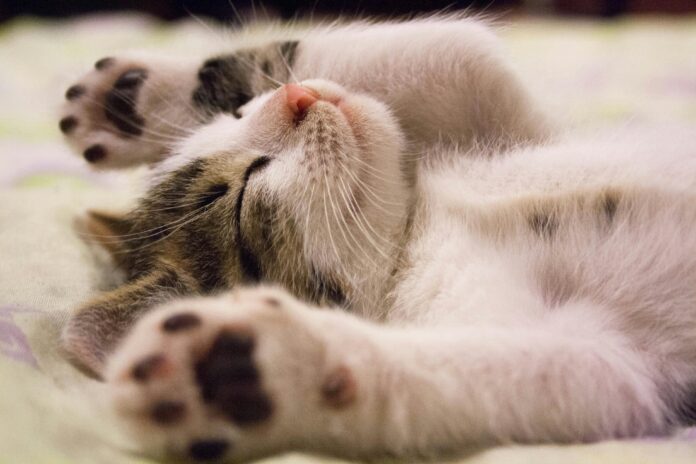

Your cat naps in a sunny spot, wakes up for a while, then curls up somewhere else just as you start wondering whether they have done anything all day.
Cats really do spend a large part of their lives resting. An often-used estimate is around 12–16 hours a day, although that is only a rough guide. Kittens, older cats, and individual adults can all have different patterns.
So why do cats sleep so much? Part of the answer lies in the way cats divide their day between short bursts of activity and long periods of rest, but age, health, routine, and the home itself all help shape what that looks like.
Why Long Naps Fit a Cat’s Way of Life
Cats are built for activities such as stalking, chasing, and pouncing. These often happen in short, intense bursts rather than as hours of steady activity.
Many cats are also more active around dawn and dusk, although they do not all follow the same timetable. A house cat may adjust activity around meals, play, people coming and going, or simply its own habits.
Rest fits naturally between those active periods. Hunting is not constant running and chasing; it also involves waiting, watching, and pausing.
That does not mean every nap can be explained as a way of “saving energy for the next hunt.” A well-fed house cat lives a very different life from a wild hunter. But the pattern of brief activity followed by long stretches of rest still makes sense when you look at the kind of animal a cat is.
Not Every Nap Is Deep Sleep
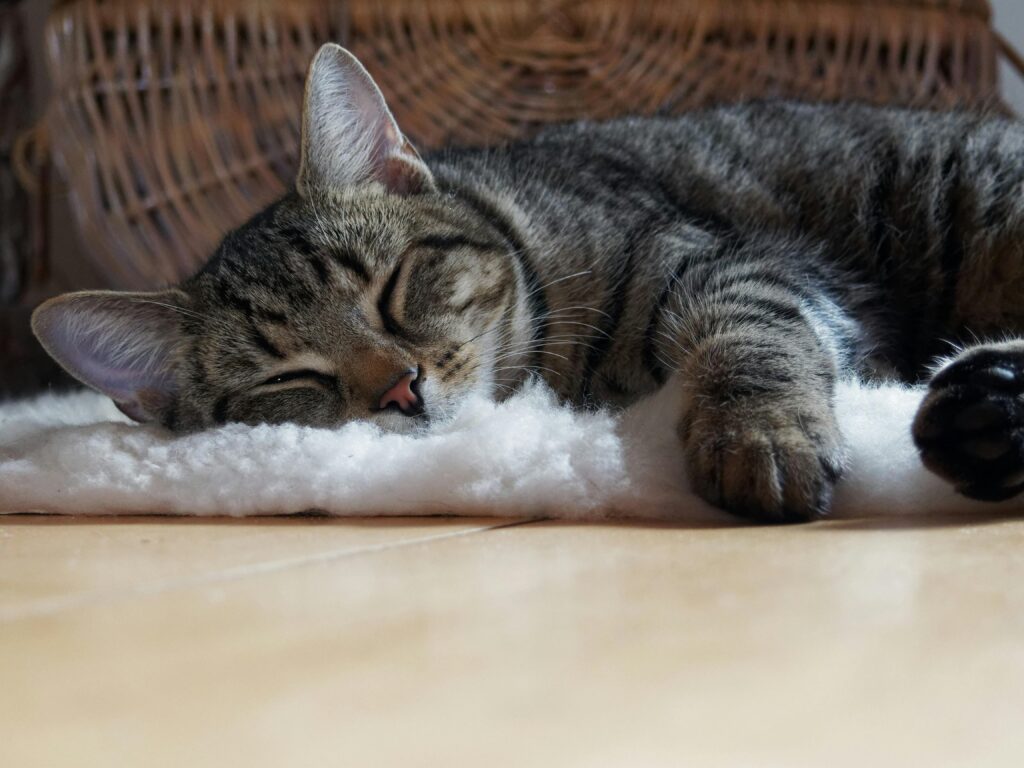
A cat that appears to be asleep may not always be sleeping deeply.
During lighter rest, the body may look relaxed while the cat still keeps track of what is happening nearby. An ear turns toward a sound, the eyes open when you walk past, or the head lifts at the rustle of a food packet.
At other times, cats sleep more deeply. The body becomes more relaxed, and small movements such as twitching paws or whiskers can happen, including during REM sleep.
Those movements are fun to notice, but they cannot tell us exactly what a cat is dreaming about.
Cats move between different levels of rest throughout the day, so several hours spent “sleeping” may actually include a mixture of light naps, deeper sleep, and periods of quiet alertness.
Sleep Changes as Cats Get Older
A kitten’s sleep pattern will not necessarily look like that of an adult cat.
Kittens spend plenty of time resting while they grow, but there is no single number that every kitten should match. What matters more is how the kitten behaves when awake and whether anything changes noticeably.
Older cats may also spend more time resting. That can be part of a slower routine, but it is worth paying attention when the change is marked.
For example, stiffness or discomfort can affect where an older cat chooses to sleep and how easily they get up. If a senior cat suddenly becomes much less active, sleeps far more than usual, or seems uncomfortable moving around, age should not automatically get all the blame.
Home Life Shapes Sleep Too
Cats do not sleep in a vacuum. What happens around them can affect when and where they settle down.
Some cats nap happily through a busy household. Others prefer a quiet room, a high perch, or a warm corner where they are less likely to be disturbed.
Light and household routine can make a difference too. A cat may become active when the family is winding down for the evening, while another adjusts closely to regular meal and play times.
Indoor and outdoor cats can also have very different days, but there is no simple rule that one group always sleeps more. An indoor cat may have long, uninterrupted periods of rest, while an outdoor cat may deal with more movement and interruptions. Individual routine matters more than the label.
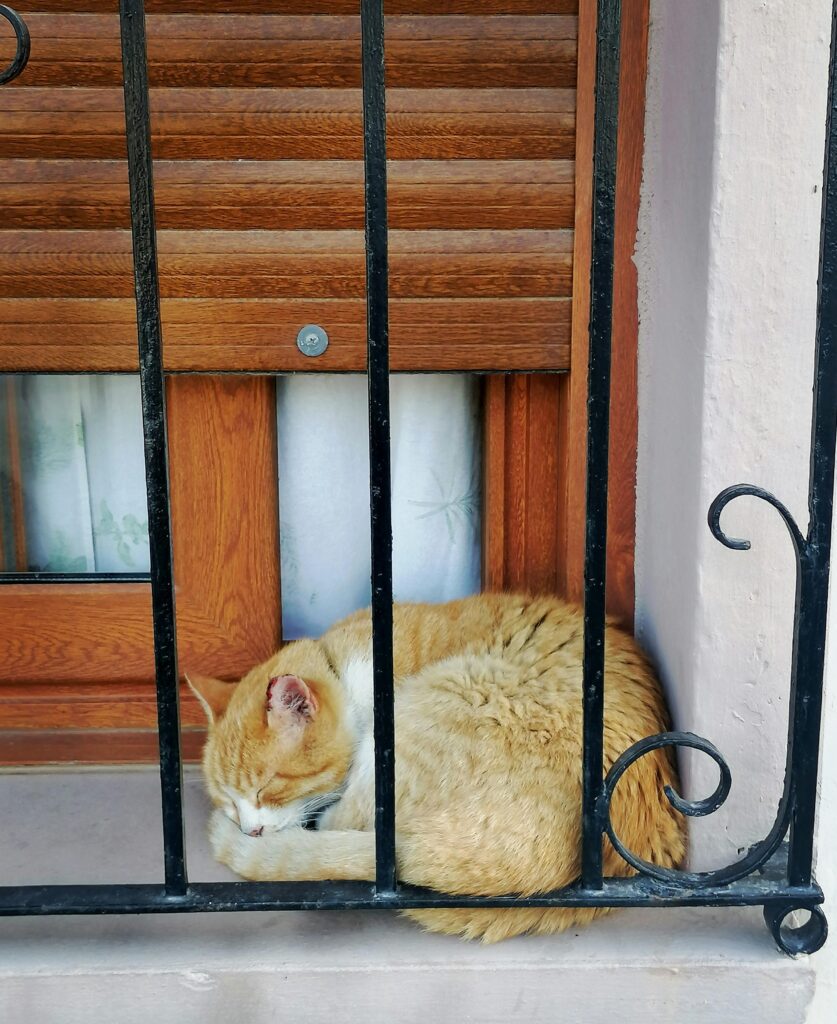
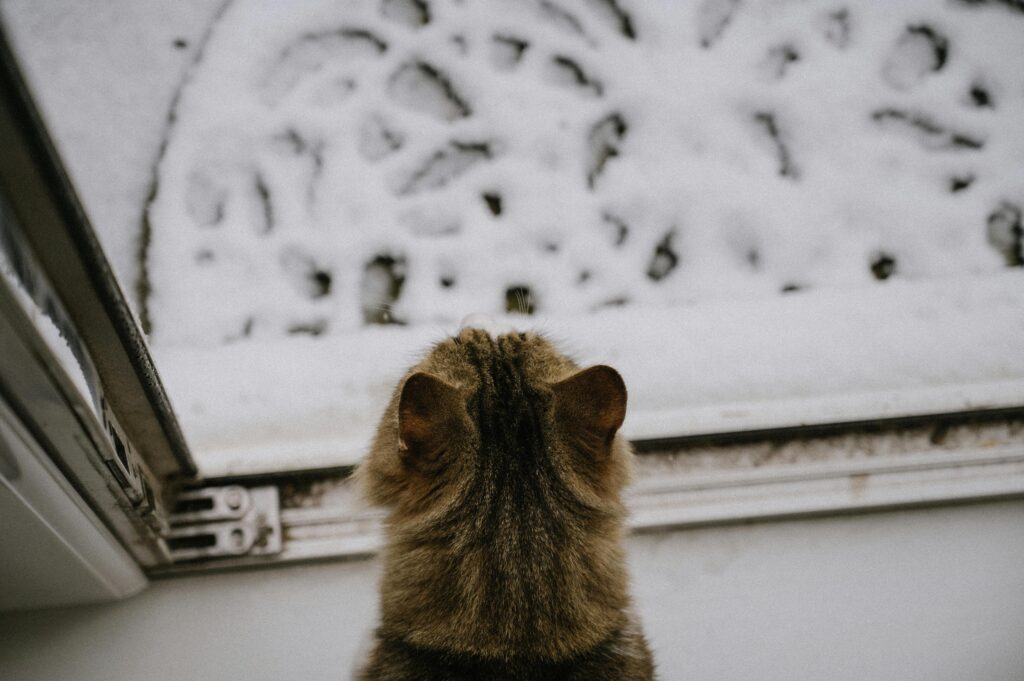
Even a favorite sleeping place can change. A cat may move from the windowsill to a warmer bed in winter, choose a different room after a move, or avoid an old resting spot when household life changes.
Usually, the most useful question is not why did my cat sleep there today? but is this different from what my cat normally does?
When More Sleep Is Worth Paying Attention To
Sleeping a lot is normal for cats. Suddenly sleeping much more or much less than usual is different.
Pay attention if a change in sleep comes with things such as:
- Eating less or more than usual
- Weight loss or gain
- Drinking or urinating more
- Moving stiffly or avoiding jumps
- Grooming less or differently
- Lower energy when awake
- Restlessness or repeatedly getting up and lying down
- Choosing unusual resting places and seeming uncomfortable
None of these signs tells you exactly what is wrong. What matters is the combination and how different it is from your cat’s normal routine.
If the change is marked, keeps happening, or comes with other signs that your cat is unwell, call your vet.
Nighttime restlessness deserves the same common-sense approach. A cat being awake at night does not automatically mean there is a thyroid problem or another illness, but a new pattern—especially alongside changes in appetite, weight, thirst, or activity—is worth checking.
Give Your Cat Good Places to Rest
Cats usually choose their own favorite sleeping places, so you do not need to find one perfect bed.
Some like elevated perches. Others prefer darker corners, soft blankets, sunny windowsills, or warm spots where they can stretch out undisturbed.
Offering a few different options lets your cat decide. Their preferences may also change with the season, time of day, or age.
Try not to interrupt a sleeping cat unnecessarily, especially if there are other comfortable places available for people and pets in the home. Rest is a normal part of a cat’s day, not laziness that needs to be corrected.
Activity Matters Too
A cat that sleeps for much of the day still needs opportunities to move, explore, and play.
Chasing a wand toy, stalking a moving object, climbing, or pouncing can give a cat an outlet for the same kinds of behaviors that come naturally to them. It often makes sense to play when your cat is awake and interested rather than trying to force activity into a fixed timetable.
Many cats are especially lively around dawn or dusk, but your own cat is the better guide.
Play does not need to be sold as a trick for making a cat sleep more deeply afterward. Its value is simpler: it gives your cat something engaging to do and helps balance a day that naturally contains plenty of rest.
A familiar routine can help too. Regular meals and recurring times for play can give the day some structure without turning it into a rigid schedule.
Your Cat’s Normal Pattern Matters Most
Cats sleep a lot, but there is no perfect number of hours that applies to every cat.
Age, health, activity, surroundings, and routine all shape the pattern. Some cats have long, obvious naps; others spend more time drifting between light rest and alertness.
The best comparison is usually not with another cat or with a number on the internet. It is with your cat’s own normal routine.
If they are eating, grooming, moving, playing, and interacting as usual, long naps are often simply part of being a cat. If that familiar pattern changes noticeably, that is when sleep becomes useful information rather than just another afternoon nap.
Sources & Further Reading
- VCA Animal Hospitals. (n.d.). Is Your Pet Sleeping Too Much?. VCA Animal Hospitals.
- VCA Animal Hospitals. (n.d.). Recognizing the Signs of Illness in Cats. VCA Animal Hospitals.
- VCA Animal Hospitals. (n.d.). Signs of Pain in Cats. VCA Animal Hospitals.
- Bradshaw, J. (2014). Cat Sense: The Feline Enigma Revealed. Penguin.
- Turner, D. C., & Bateson, P. (Eds.). (2014). The Domestic Cat: The Biology of its Behaviour (3rd ed.). Cambridge University Press.
Featured image by Pixabay